


Synthesis and Synergy: Architecture for Community |
| ALL NEWS |

The provision of community spaces has always been integral to Singapore’s urban planning. The launch of our latest publication, Synthesis and Synergy: Architecture for Community, marks an important milestone for DP Architects (DPA) in its commitment and aspiration to uplift the human experience and spirit. The publication, a culmination of years of research and practice, hopes to offer architects, urban planners, community leaders and the interested public deeper insights into architecture and its impact on the community and people.
We invite you to join the panel discussion at the book launch with DPA CEO and the book’s editor-in-chief, Ar. Seah Chee Huang, and contributing essayists comprising fellow thought leaders and practitioners, that will divedeep into urban governance, participatory design and social-spatial constructs that contribute to developing inclusive and thriving communities. The discourse will also provide exclusive insights into and reflections of DPA’s learnings about community-centric architecture across the last decade.
Book Contributors in Panel Discussion

Ar. Seah Chee Huang on Generative Hubs for Urbanism and For Regenerative Urban Ecologies: Strategies and Synergies of Integrated Community Hubs
CEO and Architect, DP Architects
Ar. Seah Chee Huang is currently the CEO of DP Architects and is a firm believer in purpose-driven architecture that synergises economic, environmental and social dynamics to bring positive impact to everyday life. He led the fraternity as the President of the Singapore Institute of Architects from 2018 to 2020 to drive sustainable design, ethical practices grounded in innovation and social causes. Ar. Seah’s notable projects include Singapore Spots Hub, Our Tampines Hub, Bukit Canberra and Punggol Regional Sports Centre – all pioneering models of integrated community, sports and lifestyle hubs in Singapore. His project, Goodlife Makan, a senior activity centre, received the prestigious President’s Design Award in 2020 for its progressive approach to elderly care.

Dr Gillian Koh on Building Community Resilience in Singapore
Senior Research Fellow, Institute of Policy Studies, National University of Singapore
Dr Gillian Koh’s research interests are in the areas of party and electoral politics, the development of civil society, state-society relations, state governance and citizen engagement in Singapore. She has co-authored several books and articles on civil society in Singapore. Dr Koh gained her PhD in Sociological Studies from the University of Sheffield (UK) in 1995 where she obtained her Master of Arts in Third World Studies in 1989, with both degrees focused on Singapore as a developmental state. She is also an alumnus of the National University of Singapore (1988).
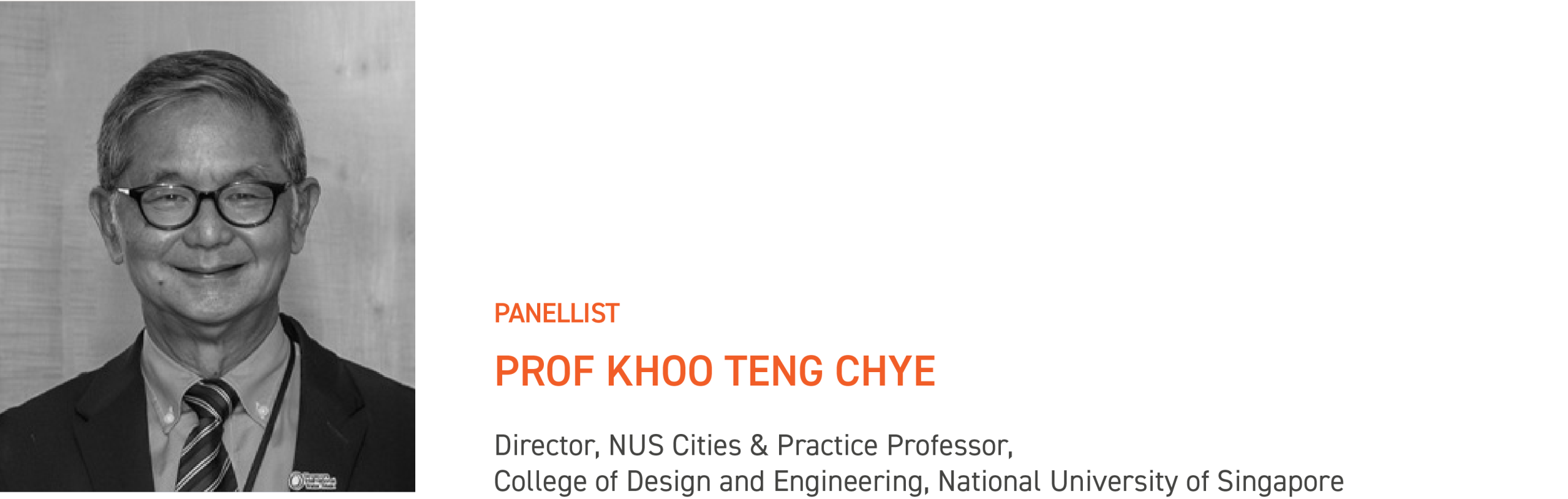
Prof Khoo Teng Chye on Citizens Co-Creating City Neighbourhoods
Director, NUS Cities & Practice Professor, College of Design and Engineering, National University of Singapore
Known for his contributions to Singapore’s urban planning and development, Prof Khoo Teng Chye was formerly the Executive Director of the Centre for Liveable Cities; Chief Executive of the Public Utilities Board, Singapore’s National Water Agency; and Chief Executive Officer/Chief Planner at the Urban Redevelopment Authority. He was awarded the Meritorious Service Medal in 2018, the Public Administration (Gold) in 1996 and the Public Administration (Silver) in 1987 by the Singapore government. He was also conferred the Meritorious Service Award by the National Trade Union Congress in 2008.
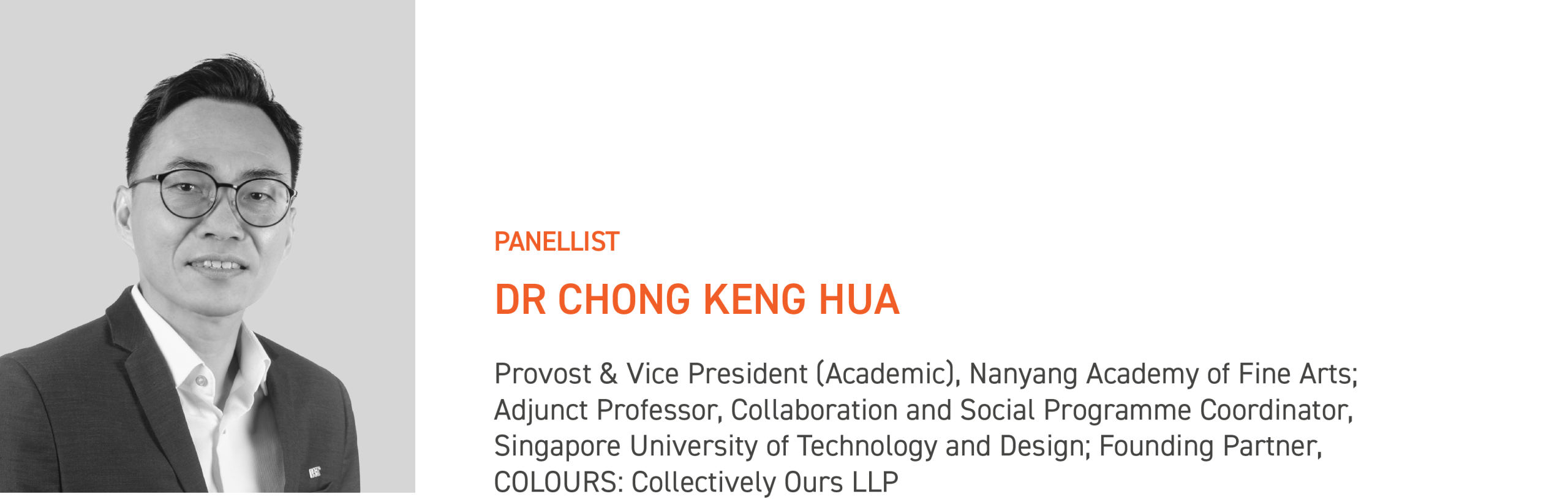
Dr Chong Keng Hua on Micro Community Interventions
Provost & Vice President (Academic), Nanyang Academy of Fine Arts; Adjunct Professor, Collaboration and Social Programme Coordinator, Singapore University of Technology and Design; Founding Partner, COLOURS: Collectively Ours LLP
Dr Chong Keng Hua’s research on ageing, health and data-driven collaborative design has contributed significantly to the field of social architecture and community design. His award-winning works raise the urgency of rethinking eldercare typology and impactful solutions for ageing-in-community. Dr Chong received his PhD in Architecture from National University of Singapore and has been a visiting faculty at Massachusetts Institute of Technology, Zhejiang University, and most recently at Aalto University. Prior to joining academia, he practiced architecture at LOOK Architects, Li Xiaodong Atelier and ARC Studio. Dr Chong is also the author of Second Beginnings: Senior Living Redefined and Creative Ageing Cities: Place Design with Older People in Asian Cities.

Dr Eun Hee Lee on Neuro-Psychological Principles for Designing Community Spaces
Assistant Professor, School of Psychology, University of Nottingham Malaysia
Dr Eun Hee Lee’s current research interests are sustainability and liveability, and the psychosocial factors that are linked with physical (built environment, climate change) and digital (new media) environments. As a Research Fellow and Deputy of the Social Cluster at Nanyang Technological University, Dr Lee worked on a large interdisciplinary project funded by the Singapore government to explore various psychological metrics associated with underground workspaces. She also worked with the Korea Development Institute (KDI) School of Public Policy and Management on the project “Public Value C-Creation in Open Government Data at the Local Level” and is a representative for Malaysia in Asian Society for Architecture and Psychology. Dr Lee obtained her PhD at the University of Cambridge on the topic of social cognition, investing the relationship between social power and perception of the physical environment.
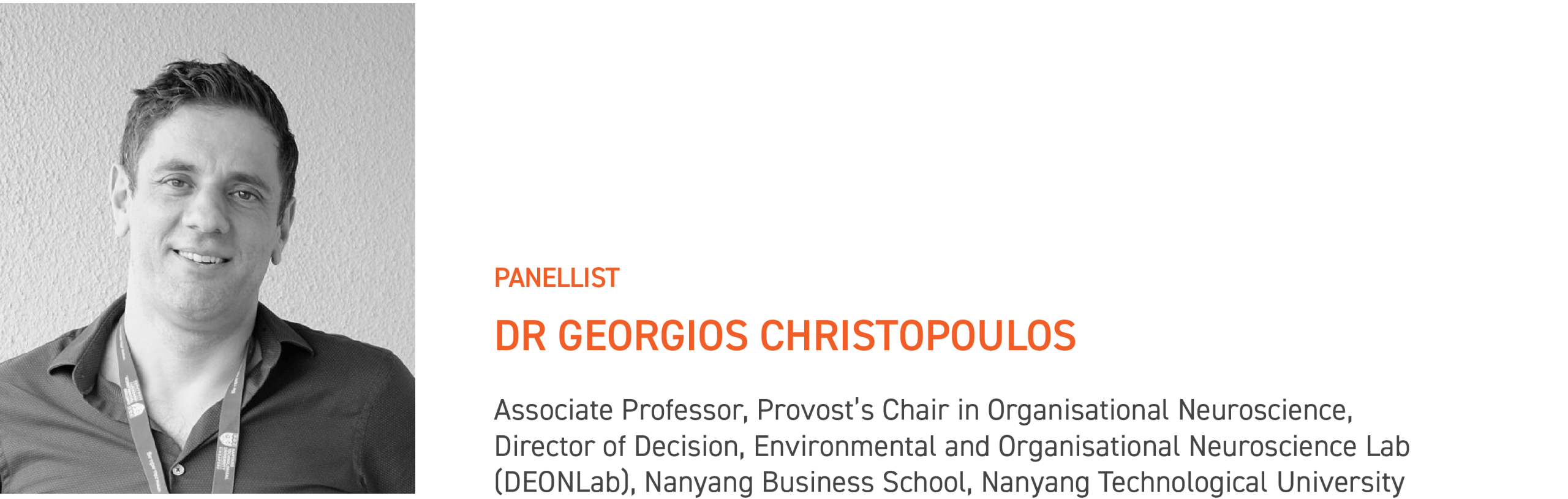
Dr Georgios Christopoulos on Neuro-Psychological Principles for Designing Community Spaces
Associate Professor, Provost’s Chair in Organisational Neuroscience, Director of Decision, Environmental and Organisational Neuroscience Lab (DEONLab), Nanyang Business School, Nanyang Technological University
Associate Professor and Provost’s Chair Georgios Christopoulos holds a PhD in Cognitive Neuroscience from the University of Cambridge. His research integrates traditional methods (e.g. surveys) with advanced techniques – including neuroscience, wearable sensors, virtual reality and environmental metrics – to study how indoor and outdoor urban environments impact the human brain, cognitive performance, mental fatigue, wellbeing and mental health. His work spans a wide range of applied contexts, including offices, control rooms, military and naval operations, hospitals and urban parks, exploring how people interact with and are affected by the spaces they inhabit.
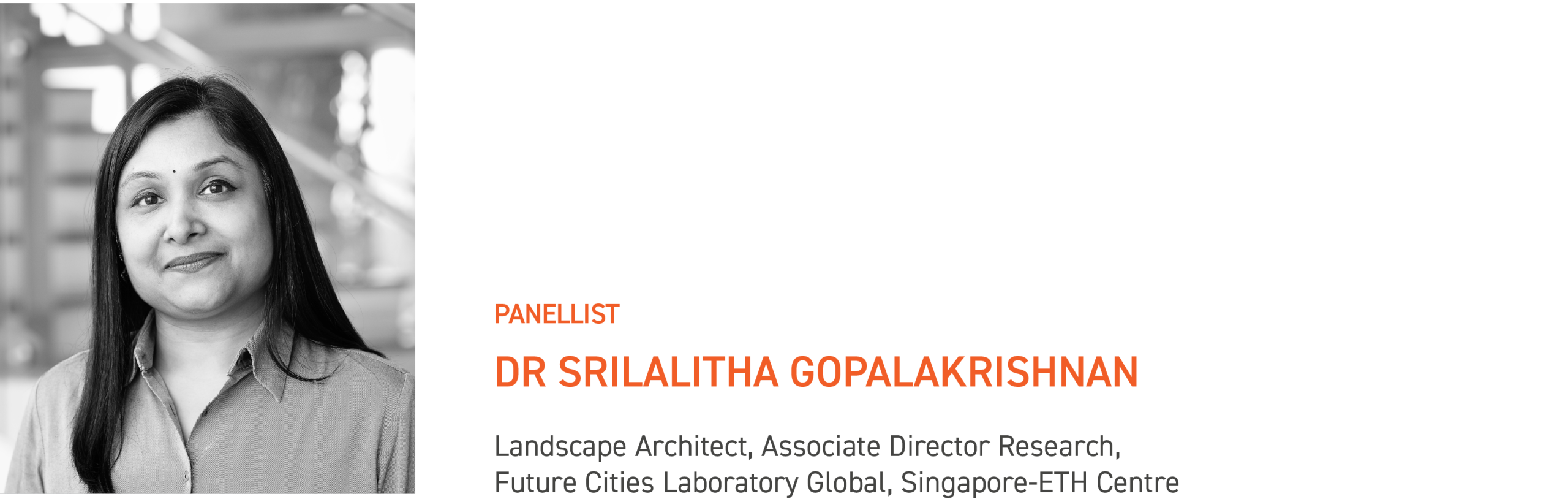
Dr Srilalitha Gopalakrishnan on From City In Nature to City As Nature: A Regenerative Approach to a Nature-Positive Future
Landscape Architect, Associate Director Research, Future Cities Laboratory Global, Singapore-ETH Centre
Dr Srilalitha Gopalakrishnan is an accomplished landscape architect with over 15 years of professional experience in diverse projects across Singapore, Malaysia, China, Hong Kong and India. She is currently the Associate Director Research at the Future Cities Laboratory Global, Singapore-ETH Centre and serves as President of the Singapore Institute of Landscape Architects, representing the profession locally and regionally. Dr Gopalakrishnan received her Phd in Architecture and Sustainable Design at the Singapore University of Technology and Design, focusing on the performance of integrated landscape design in high-density urban environments for resilient and sustainable urban design solutions.
Non-Panellists Book Contributors

Ar. Shawn Teo on Generative Hubs for Urbanism
Senior Associate, DP Architects
Ar. Shawn Teo has been active in academic research and architectural publications since university, focusing on history, theory and design exploration. As a proponent of practice research, Shawn is part of DP Architects’ hospitality typography study group. After working on key design competitions such as Jurong Lake District and Changi Terminal 5 with Grimshaw, he is now a registered architect and project architect for notable projects like The Standard Singapore and Conrad Singapore Orchard.
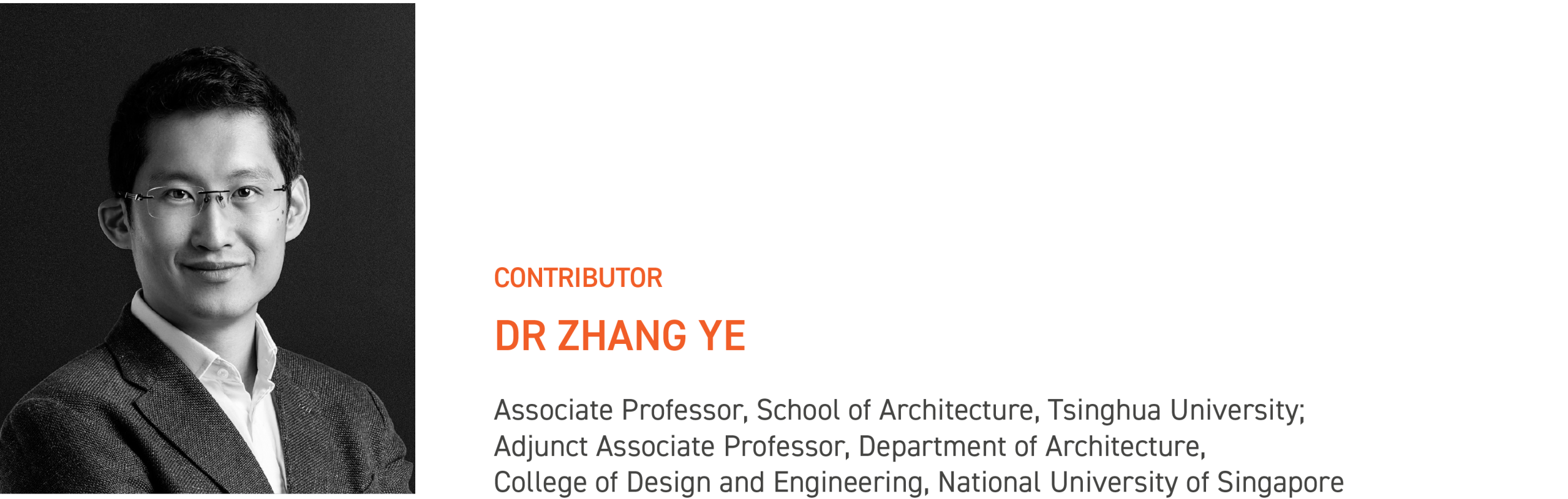
Dr Zhang Ye on Towards a New Architecture of Sharing Communities
Associate Professor, School of Architecture, Tsinghua University; Adjunct Associate Professor, Department of Architecture, College of Design and Engineering, National University of Singapore
Dr Zhang Ye’s principal research interest resides in synergising different approaches to describing, analysing and assessing urban form and its association with various social and economic activities in the city. Ye has published widely in the field of urban form and urbanism. His recent books include Sharing by Design (co-authored with Dr Jeffrey Chan) and Conserving and Managing Historical Urban Landscape: An Integrated Morphological Approach (co-authored with Li Xiaoxi). Dr Zhang Ye holds a PhD in Architecture from the University of Cambridge, UK.

Dr Jeffrey Chan on Towards a New Architecture of Sharing Communities
Assistant Professor, Humanities, Arts and Social Sciences/Design and Artificial Intelligence, Singapore University of Technology and Design
Dr Jeffrey Chan’s research focuses on design ethics in the context of large-scale sociotechnical systems and urbanisation. He is the co-author of Sharing by Design (co-authored with Dr Zhang Ye) and Urban Ethics in the Anthropocene: The Moral Dimensions of Six Emerging Conditions in Contemporary Urbanism. Dr Jeffrey Chan received his PhD in Architecture (Design Theory and Methods) from University of California, Berkeley, and is an alumnus of Harvard University (M.Ed in Mind, Brain and Education) and the Southern California Institute of Architecture (B.Arch).
Harnessing the collective design experience and multidisciplinary expertise of our people under the practice’s Green-Well-Tech thrust, DP Architects is committed to creating meaningful and impactful architecture for the community. Since its early landmark projects such as People’s Park Complex and Golden Mile Complex, the practice has continuously explored concepts revolving around architecture and the community, including vertical urbanism, integrated social condenser, city room and linear cities. This community-centric principle, which evolved from Our Tampines Hub and One Punggol, now forms a defining framework for recent developments such as Bukit Canberra, SAFRA Choa Chu Kang and Centres for Goodlife.
The process of crafting Synthesis & Synergy: Architecture for Community has been an invaluable opportunity to reflect on and consolidate DPA’s knowledge and expertise gained over the years, enabling us to strengthen our commitment with a renewed focus on deeper both local and global challenges. With a sincere dedication to creating architecture that benefits the people it serves, DPA seeks to adopt regenerative design thinking to achieve better-than-sustainable outcomes in responding meaningfully to the current global climate and contributing to the creation of a better environment for all forms of sustainability. As community needs evolve, architecture and design must also continuously adapt to address.