


Four DPA Projects Recognised at the International Architecture Awards (IAA) 2025 |
| ALL NEWS |
DP Architects is pleased to share that four of the firm’s projects have been recognised at the International Architecture Awards (IAA) 2025. Selected from over 500 projects globally, Bukit Canberra and Chengnan Riverfront Urban Complex won the award for their excellence in design, planning and sustainability. Receiving Honourable Mention are GET SPACE and Tianjin Eco-City Green Innovation Park Master Plan (Sino-Singapore Tianjin Eco-city Green Innovation Park) with thoughtful designs that consider both architectural sensitivity and the local context.
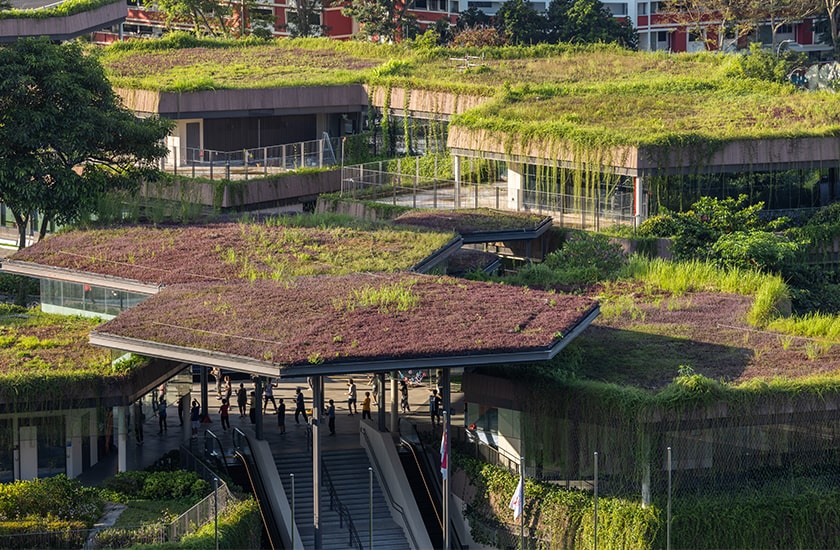
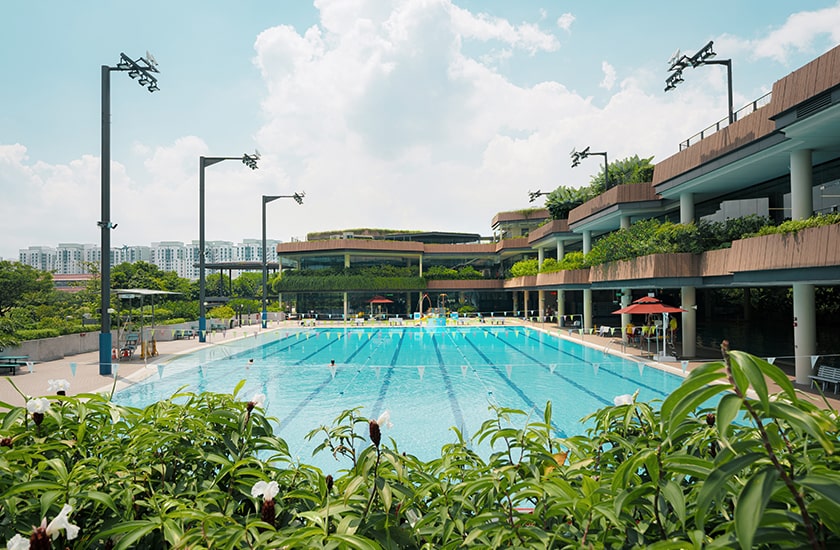
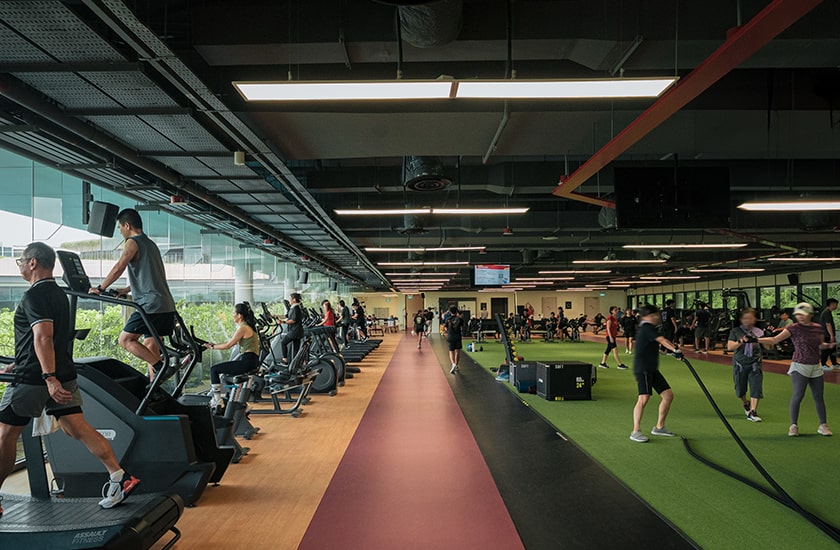
A winner in the Sports and Recreation category, Bukit Canberra responds to the area’s growing urban density and Singapore’s push towards active and healthy living as a large-scale integrated community, sports and lifestyle development while preserving the site’s built and natural heritage. Featuring the unique application of nature-inspired hexagonal geometry in the building’s massing planning, the development enables varied spatial configurations to facilitate new dimensions for community interaction. The geometry seamlessly blurs the boundaries between indoor and outdoor spaces, weaving landscaped areas into the modules and effectively blending nature with sports and recreation. Leveraging the site’s existing forest ecology, Bukit Canberra’s design introduces a landscape network that acts as a connective tissue, where recreational movement is integrated into the natural environment through networks of experiential paths, encouraging movement and fostering physical wellbeing across age, ability and background. Additionally, green construction practices and passive design strategies underpin the development’s sustainability goals, creating a civic model for long-term social and environmental resilience.
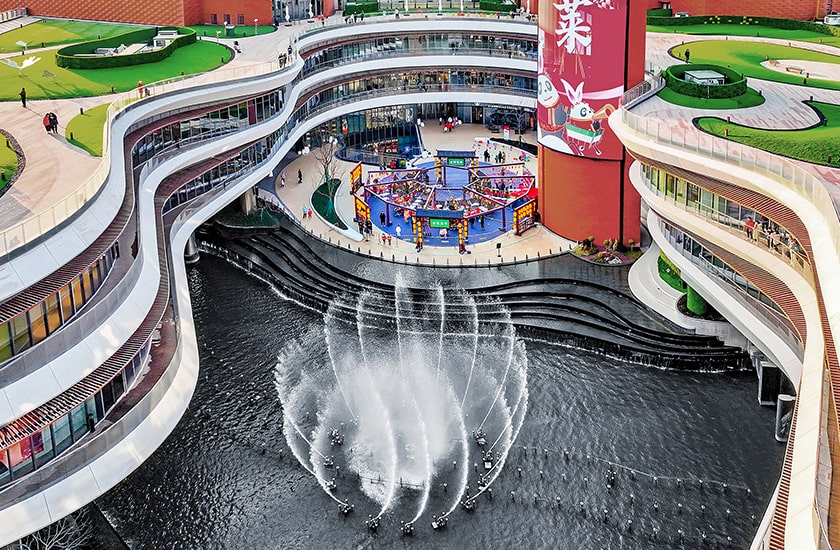
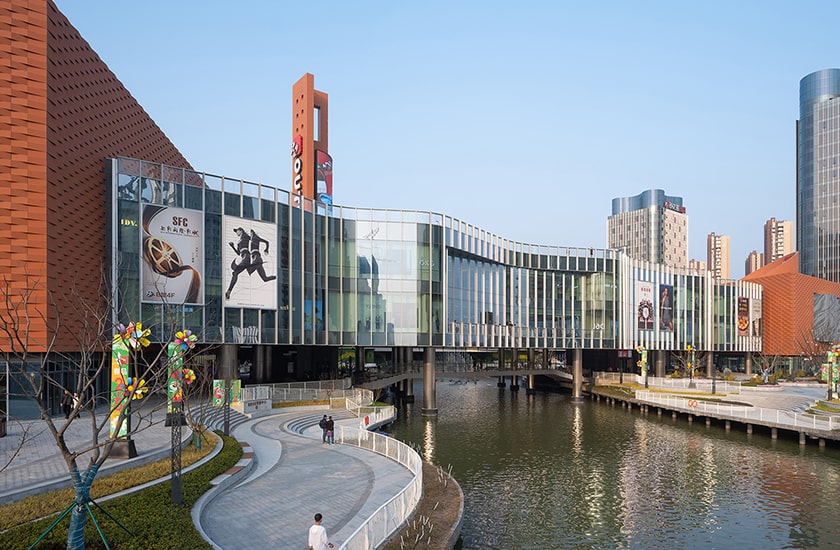
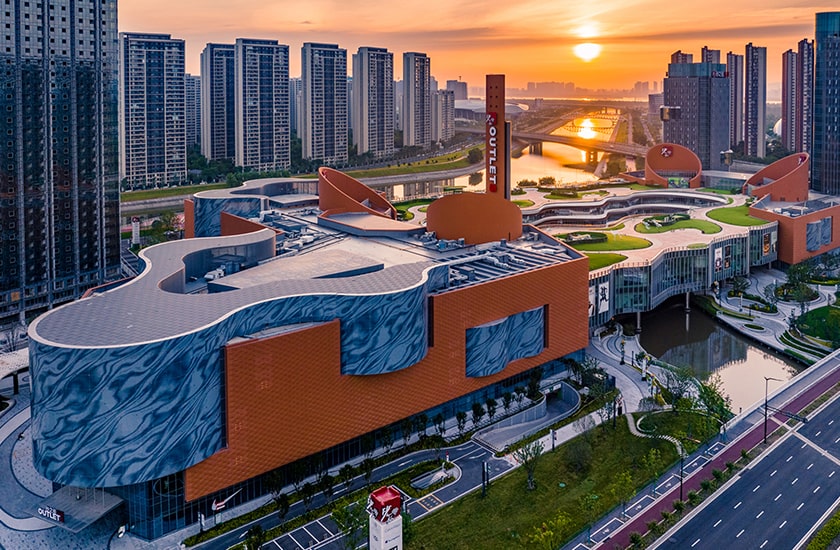
Exemplifying urban integration through innovative design, Chengnan Riverfront Urban Complex in Nanjing, China, was recognised as a winner in the Mixed Use Buildings category. An exercise in urban revitalisation, the design for this mixed-use development comprises retail, residential and workplace components, with a focus on placemaking, environmental wellbeing and creating commercial value. Its two plots of land, divided by the existing Nannong River and a pump station, are strategically unified through the architectural podium and elevated commercial bridges. The former is central in leveraging the riverfront as a key asset in placemaking and generating new community-centric spaces. With a fluid, non-linear form, the podium embraces the river while its layered, multidimensional programming creates expansive public-access spaces that engage the riverfront. Innovative use of elevated commercial bridges enhances accessibility, providing easily navigable circulation pathways and uninterrupted entry points for urban permeability. The concept of an ‘Eco River Valley’ drives the integration of landscaped spaces featuring local flora and fauna around the central courtyard and rooftop, promoting end-user wellbeing while activating the development’s capacity to generate social capital. Seamlessly melding with the river, the design scheme fosters a continuous engagement with the outdoors and encourages a more positive relationship between the urban and the natural.
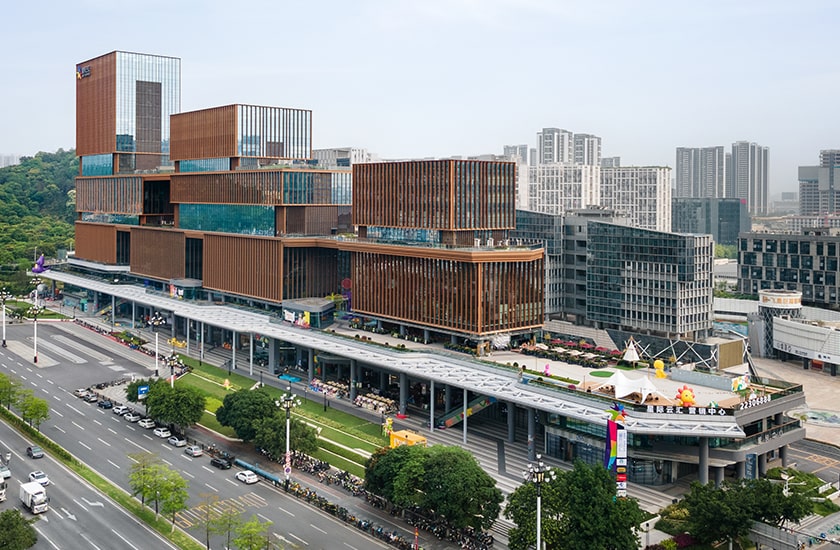
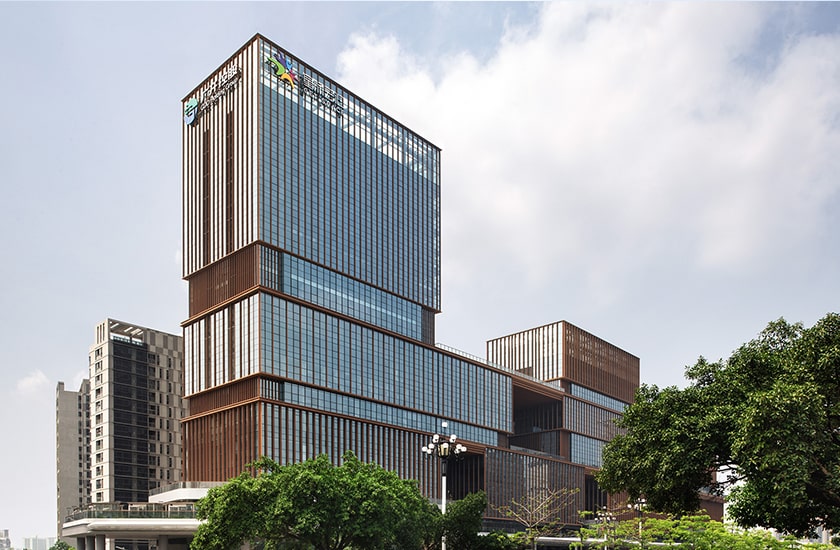
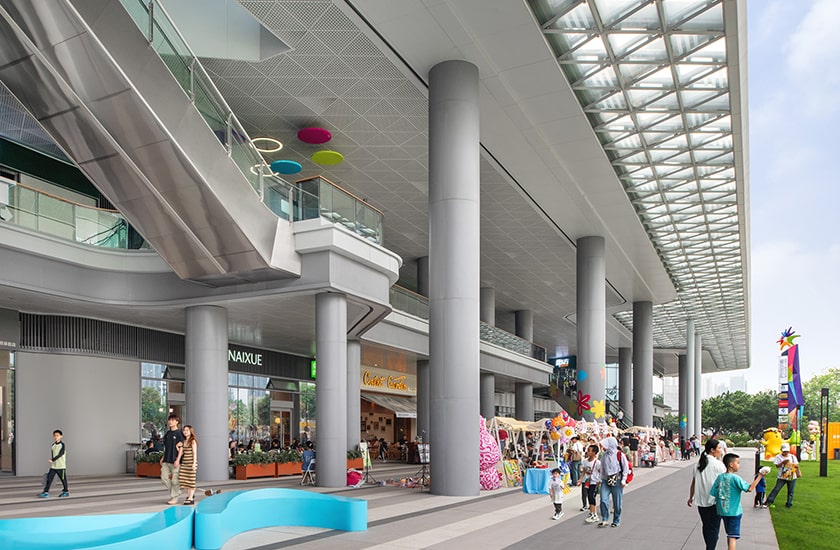
Winning Honourable Mention in the Commercial Buildings category, GET SPACE is a mixed-use, transit-oriented development (TOD) within the core area of Guangzhou Science City. Central to the development’s design scheme is the balance between land value maximisation and sensitivity to the city fabric. Exploring the form of two ‘horizontal’ skyscrapers, the interplay of volumes through stacking, sliding and displacement forms an interesting dialogue of masses and voids in conjunction with its urban surroundings. Continuous open street blocks, multi-level and sky decks form high-interactive venues that allow visual and physical engagement with the city while also replenishing the green spaces in the densified urban environment. Generating social and economic value through the combination of community-forward design strategies and flexible programming, the development revisits and redefines the relationship between the built environment and the city street.
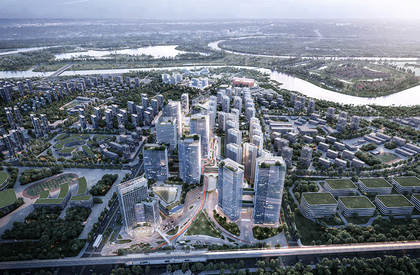
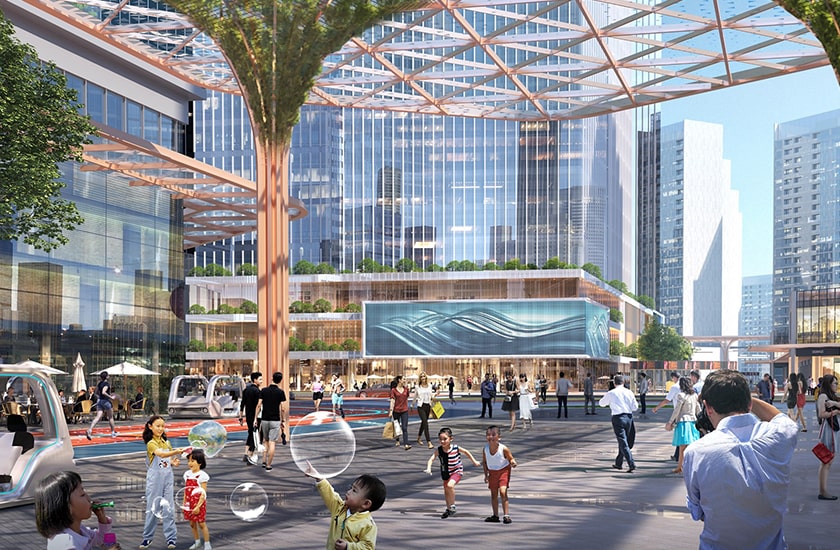
Tianjin Eco-City Green Innovation Park Master Plan (Sino-Singapore Tianjin Eco-city Green Innovation Park), recognised with Honourable Mention in the Urban Planning/Landscape Architecture category, aims to pioneer a sustainable development model in response to the ‘Dual Carbon’ policies in China, guided by Sino-Singapore Tianjin Eco-City’s planning framework and Singapore’s sustainability experiences. The design scheme envisions a continuously growing urban landscape, grounded by a Central Activity Belt—the Eco-Boulevard—connecting the Sino-Singapore Friendship Park and the Z4 Light Rail station. Complemented by a series of innovative infrastructures integrated with the latest sustainability technologies, the Belt comprises different hierarchies of permeable public spaces—the Eco-Atrium, Eco-Veranda and Eco-Canopy. An enclosed indoor public space, the Eco-Atrium features passive cooling and energy-saving smart controls, while the Eco-Veranda and Eco-Canopy are strategically located as circulation and node spaces, with sheltered walkways and event spaces integrated with BIPV glasses to harvest solar energy and rainwater. The master plan epitomises a system of thoughtful and sustainable urban practices, interweaving multiple urban clusters with diverse communal and civic spaces, offering a blueprint for future sustainable cities.
The International Architecture Awards (IAA), organised by The Chicago Athenaeum: Museum of Architecture and Design together with The European Centre for Architecture Art Design and Urban Studies, is currently in its 20th year and recognises projects that showcase architectural excellence, innovation and sensitive designs.