


DPA Projects Recognised at Rethinking the Future Awards 2026 |
| ALL NEWS |
Demonstrating design excellence that is at once responsive to context and contemporary needs, four of DP Architects’ projects have been awarded respective category wins at Rethinking the Future Awards 2026. Winners include My Home 99 and Raffles Sentosa Singapore, along with Runners-Up Mövenpick Singapore and Hanoi Centre.
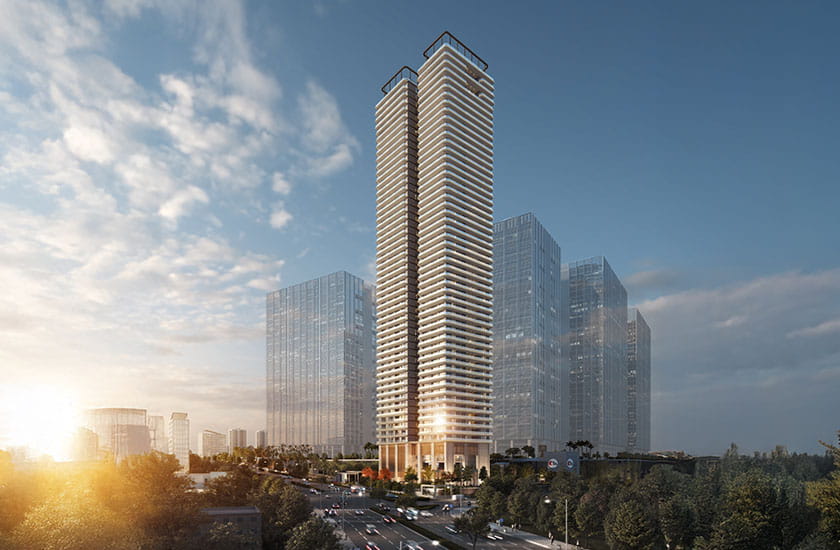
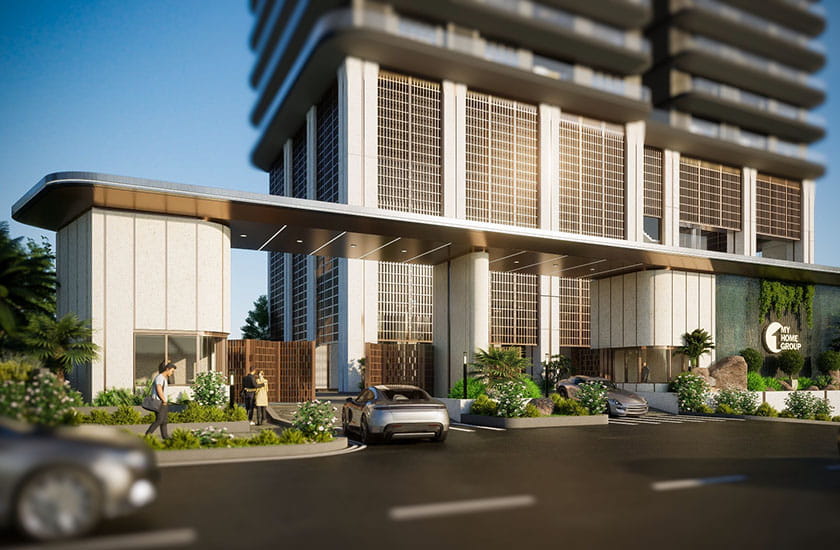
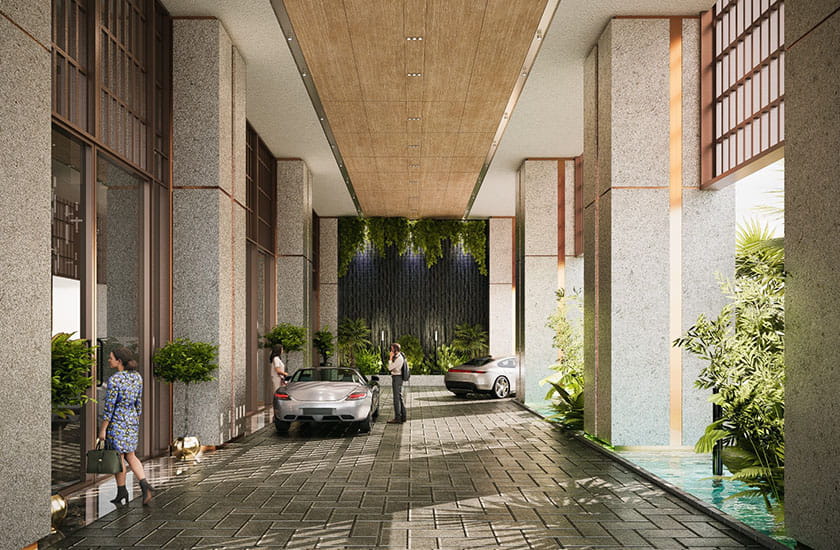
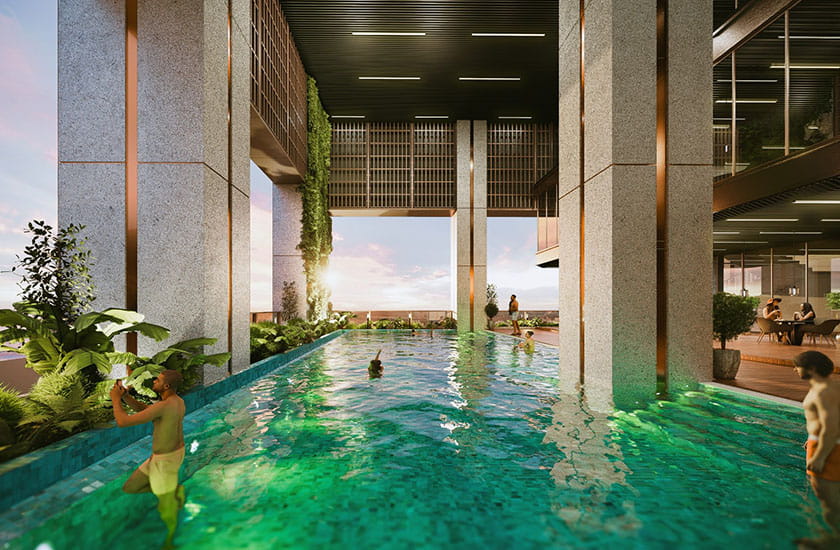
A winner of the Iconic Building (Concept) category, My Home 99 (India) exemplifies a climate-responsive approach to residential design. Given its location in Hyderabad, the design scheme addresses the locale’s intense solar exposure and high summer temperatures through strategic massing and spatial programming. Amenities are integrated within the lower levels of the building to form a shaded and thermally-protected podium, reducing direct heat gain while fostering community interaction. These are supplemented by the meaningful use of Jaali screens – traditional Indian perforated screens – reinterpreted through a contemporary architectural lens. Beyond their aesthetic qualities, the screens are meticulously calibrated based on solar orientation and environmental simulation studies to filter harsh sunlight and reduce glare. The result is a gentle infiltration of soft, diffused natural daylight into interior spaces. Combined with expansive residential units optimised for natural light, ventilation and panoramic views, My Home 99 presents itself as a refined development underpinned by a climate-conscious consideration for liveability.
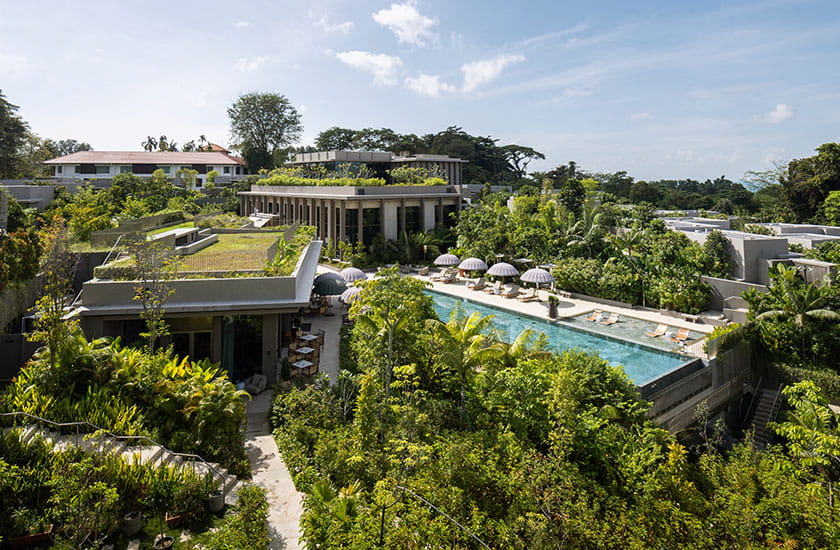
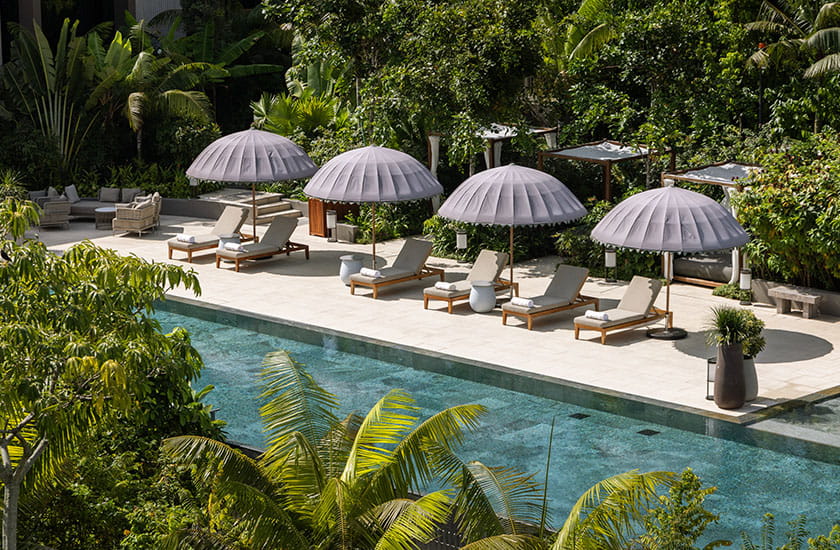
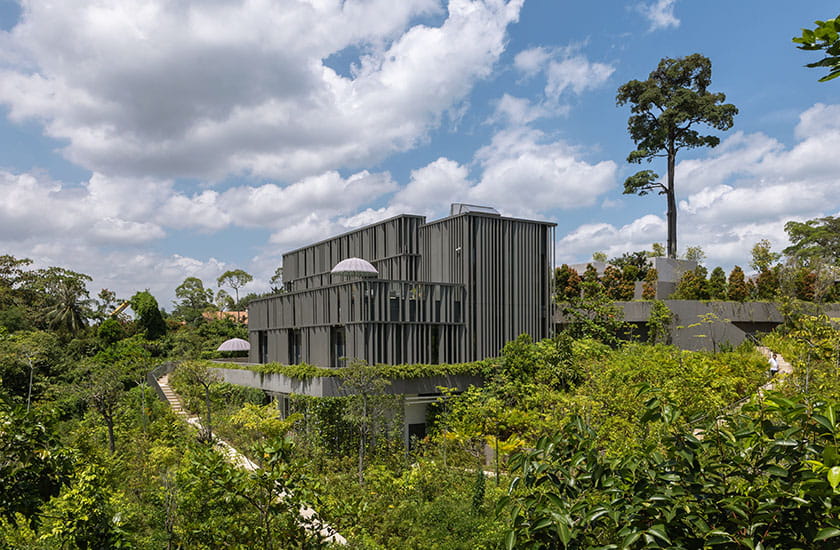
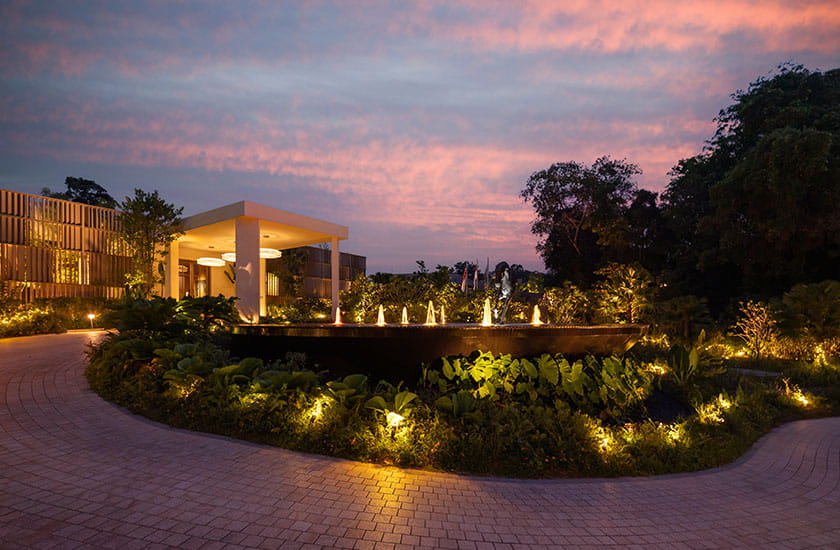
Recognised as a winner of the Hospitality (Built) category, Raffles Sentosa Singapore, conceptualised by Yabu Pushelberg and executed by DP Architects’ multidisciplinary team, articulates a topography-informed approach to produce a low-density villa resort in dialogue with its surrounding natural landscape. In response to the land’s undulations, the design scheme reorganises its massing and spatial planning to form an ecologically rooted development. With sustainability at the forefront of the design approach, multiple green strategies were incorporated to support biodiversity as well as long-term operational and environmental viability. These include energy efficiency monitoring measures, rainwater harvesting and a water-efficient irrigation system with sub-soil drip irrigation and rain sensors. Maintaining a restrained architectural language through simple geometries, natural materials and a controlled palette, Raffles Sentosa Singapore foregrounds its environmental surrounds to create an immersive experience anchored in the site’s natural character.
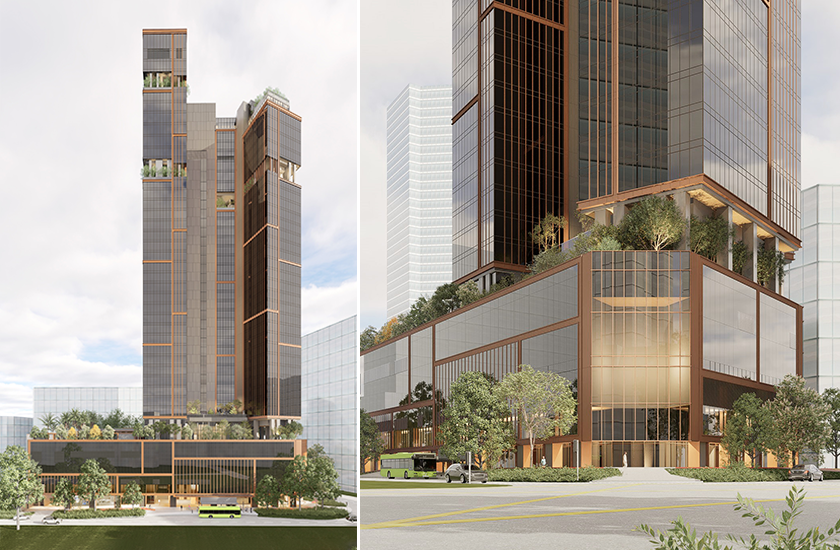
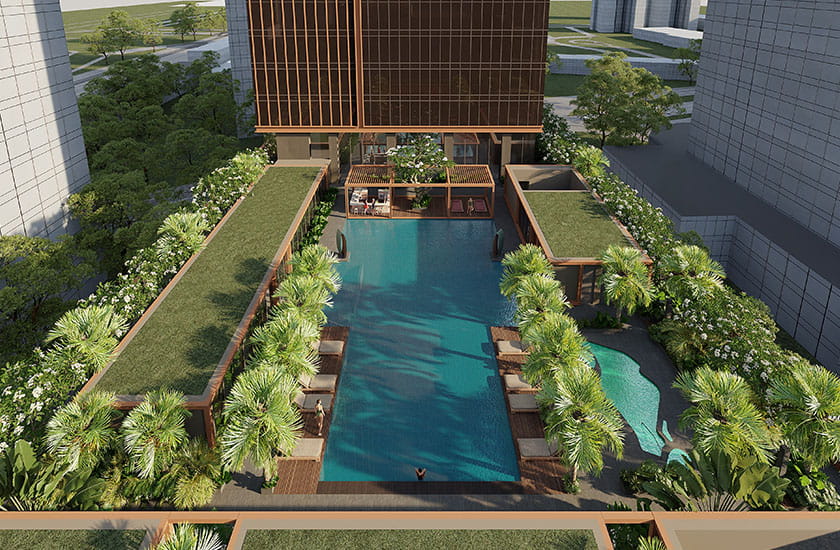
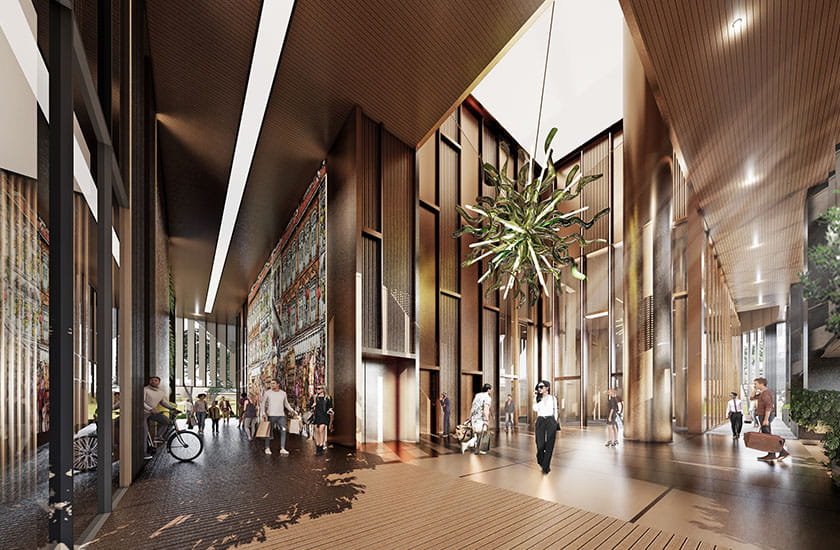
A Runner-Up in the Hospitality (Concept) category, the design for Mövenpick Singapore is guided by a consideration for the urbanscape. Located within Singapore’s Downtown Core in the evolving Tanjong Pagar district and within close proximity to the future Greater Southern Waterfront, the establishment was conceived as a hospitality landmark that reframes high-density urban development through sustainability, inclusivity and contextual identity. Leveraging its vertical density, the scheme creates layered spatial experiences, elevated landscapes and interconnected public realms that extend the city upwards while drawing cues from the locale’s maritime heritage to present a culturally rooted hospitality experience. With accessibility and user comfort embedded in its design approach, Mövenpick Singapore demonstrates a harmony between cultural continuity and regenerative urban design.
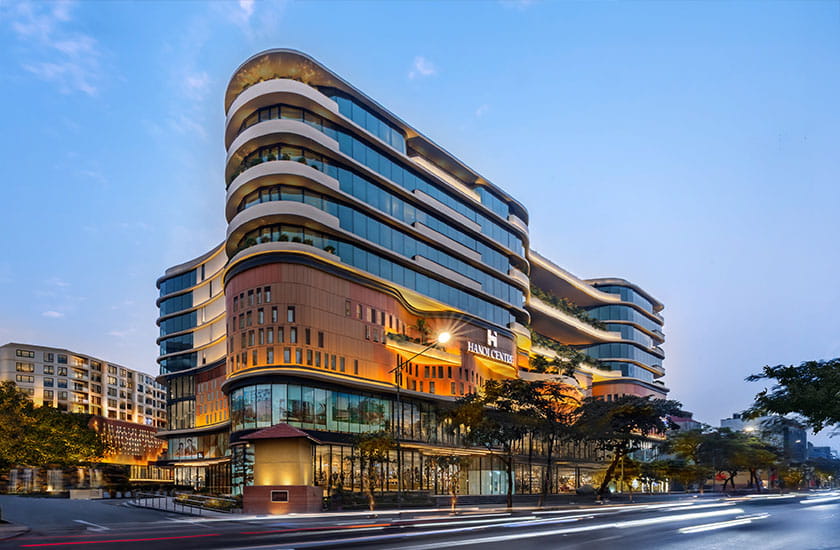
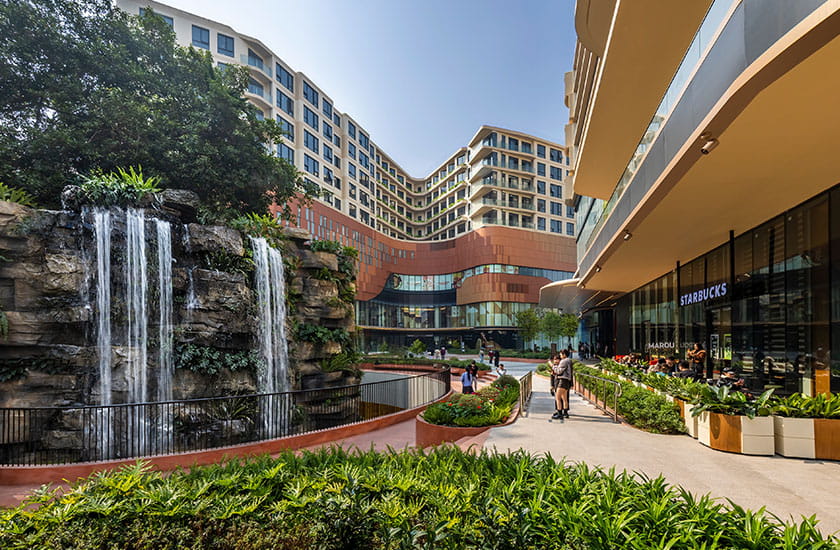
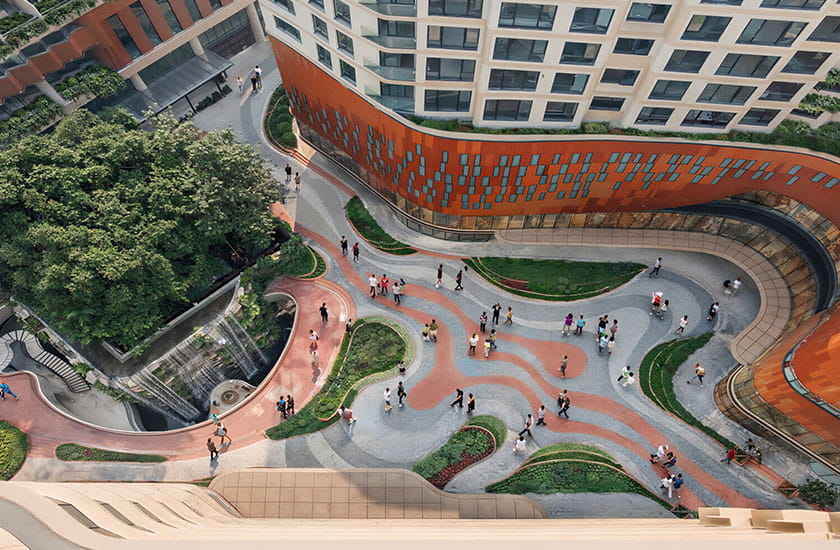
Commended as Runner-Up in the Mixed Use (Built) category, Hanoi Centre (Vietnam) is a sensitive transformation of the former Tien Bo Printing Factory into a renewed development with contemporary relevance. Seeking to reposition the building as a porous, community-oriented centre, the design scheme reimagines the once dense industrial block as a zonal heart of the area, dissolving boundaries and inviting the city inwards into the development. At the same time, the building adopts a climate-responsive approach to address Hanoi’s intense summer months, with its exterior defined by a high-performance terracotta ventilated skin that acts as the primary environmental regulator. Coupled with its thoughtful spatial organisation inspired by the traditional Vietnamese courtyard and the natural, wind-sculpted limestone landscapes of the region, Hanoi Centre introduces a scaled form that mimics a geological canyon to serve as a catalyst for urban movement, reimagining the once enclosed perimeters into a porous urban fabric that integrates with its urban surroundings.