

DPA and DPG Win Seven Gold Awards at Urban Design & Architecture Design (UDAD) Awards 2026 |
| ALL NEWS |
Taking home seven Gold Awards at the Urban Design & Architecture Design (UDAD) Awards 2026, projects by DP Architects and DP Green have been recognised for sensitive design approaches that consider the urban and natural environment. These projects span overseas and local developments, and are namely Danzhou Bay Hub, Life Hub @ Bund Central and Luneng Dalian Jinshitan Meilihui in China; RMZ Nexity in India; as well as Paya Lebar Green, The Standard, Singapore and Rainforest Wild Adventure WEST in Singapore.
China
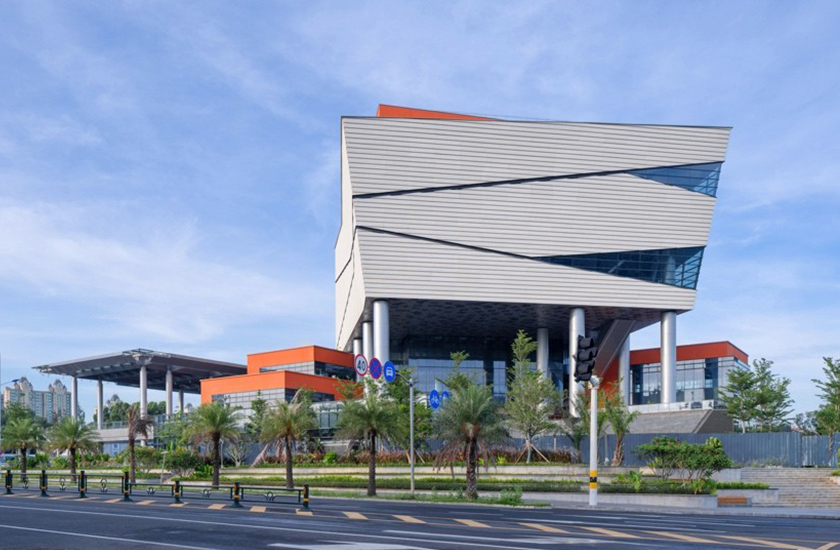
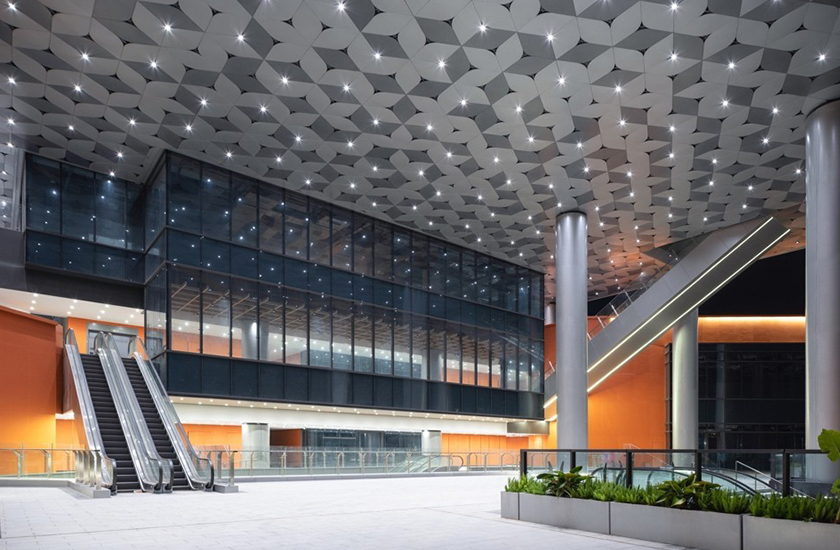
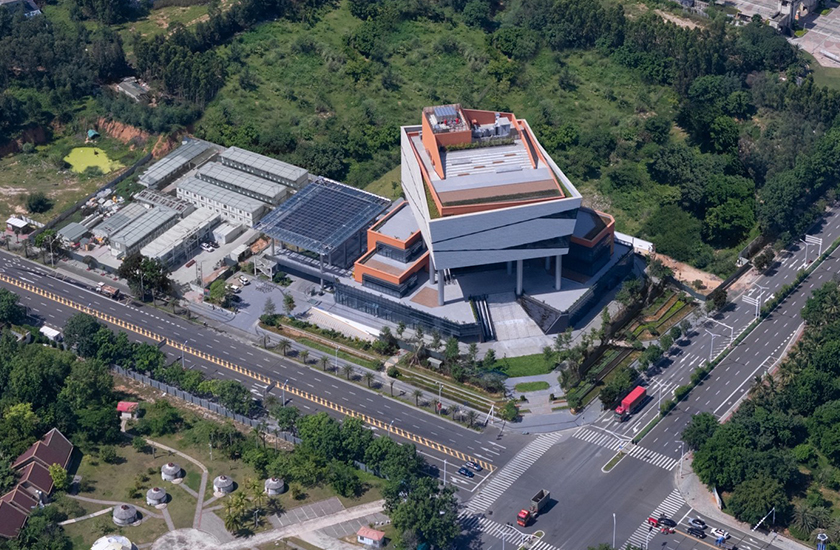
Awarded Gold in the Public Building (Built) category for its placemaking strategies, Danzhou Bay Hub is envisioned as a shared community space for both residents and visitors, revitalising the surrounding area and local culture. Addressing the increased need for diverse amenities, the design revamps existing facilities to include informal spaces of various scales along with two major open spaces – an open floor on the second level and a plaza sheltered by an eco-canopy – that provide alternative public settings for community interactions and larger-scale cultural activities. Inspired by the natural stacked form of volcanic rocks, these layered grey spaces which created through rotation, stacking and interlacing of its massing serve as transitional zones and function as versatile venues to foster social vitality. Additionally, the building incorporates passive design elements, including overhangs, vegetation, shading and natural ventilation to achieve an ultra-low-energy development, establishing a sustainable and community-centric space for vibrant social and cultural outcomes.
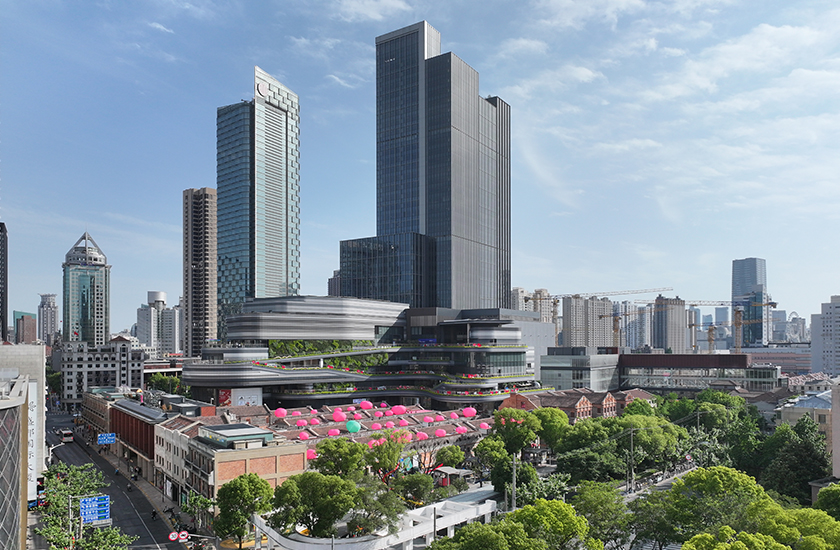
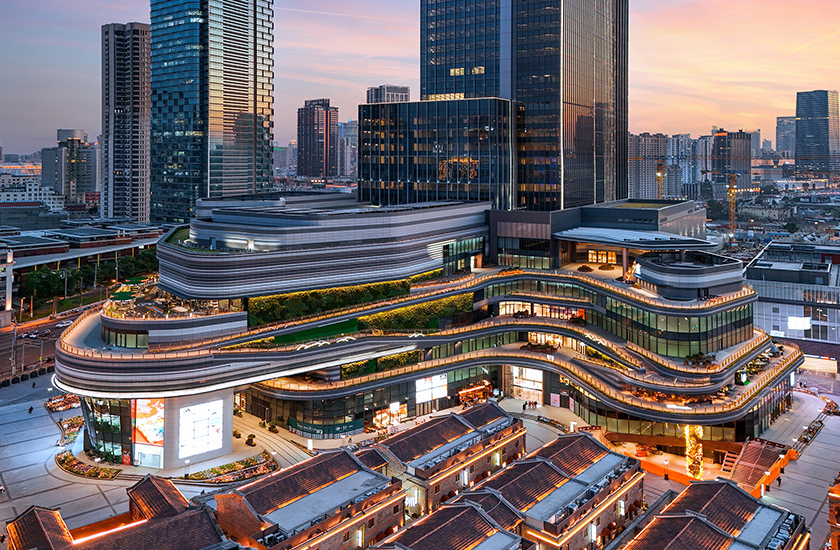
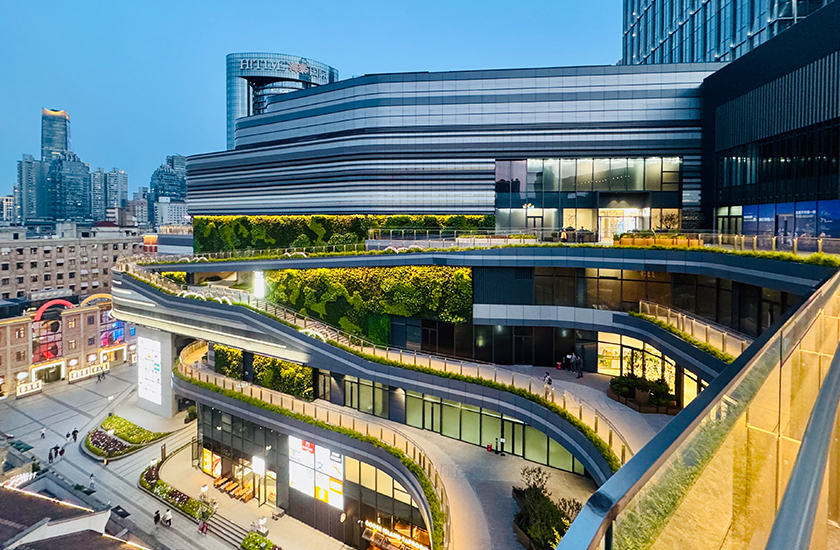
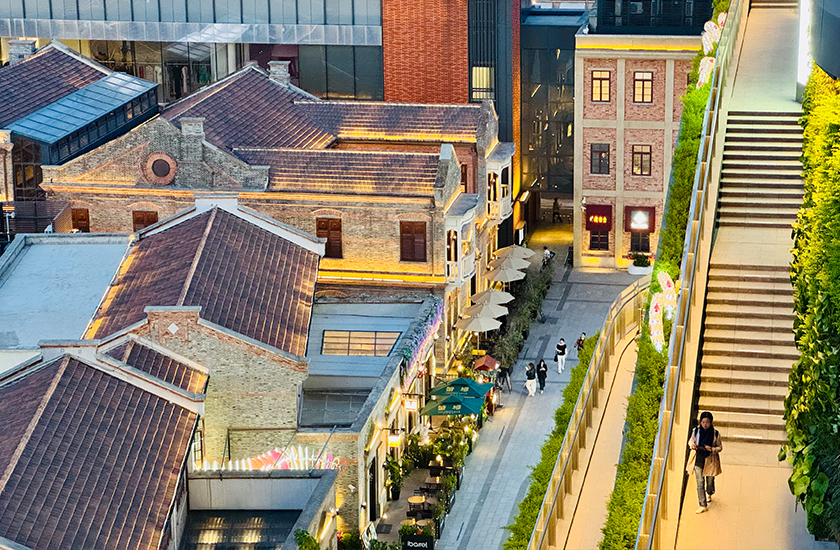
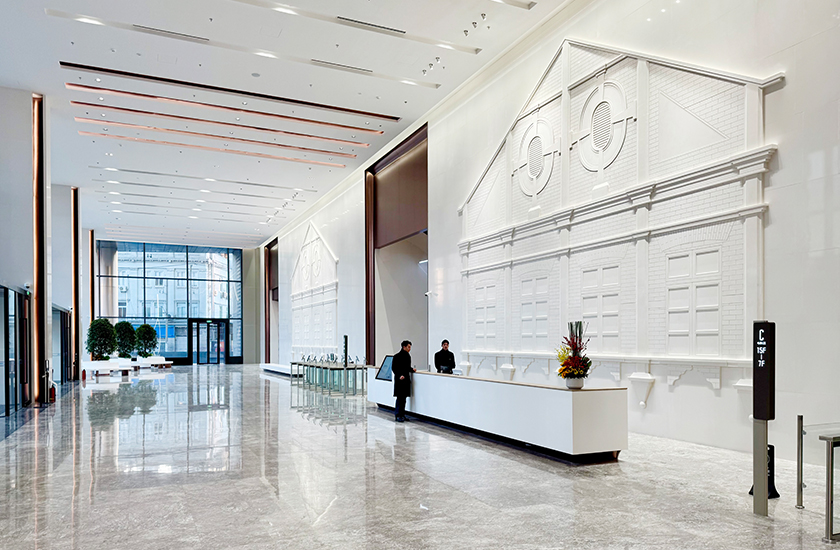
Life Hub @ Bund Central, a Gold winner in the Mixed-Use Architecture (Built) category, is a key component in the urban regeneration of the larger Hongkou Lot 18 in Shanghai. Accommodating approximately 267,000 square metres of new building area for retail and office use, the development forms a mega complex amidst the Heritage Zone while reflecting a sensitivity towards the locale’s history and scale in its urban interfaces. Textured striations of grey ceramic and aluminium panels on its façade draw references from a palette of existing urban fabric and serve as visual reminders of historical masonry constructions, forming a meaningful dialogue between the old and the new. Focused along the south, the massing is expressed architecturally as large, interlocking volumes and gently leads down into a terraced Garden Walk that connects seamlessly with the adjacent series of heritage buildings. The strategic system of pathways and activated plazas links both cultural and retail clusters, and simultaneously connects the development with the surrounding cultural buildings, including Gongyi-Fang, one of the largest conserved in-situ ‘shiku-men’ neighbourhoods, as well as the Hongkou Cultural Centre and the Shanghai Literature Museum. These intentional spatial and visual connections come together to reframe urban revitalisation, establishing a unique commercial destination within a conserved heritage context.
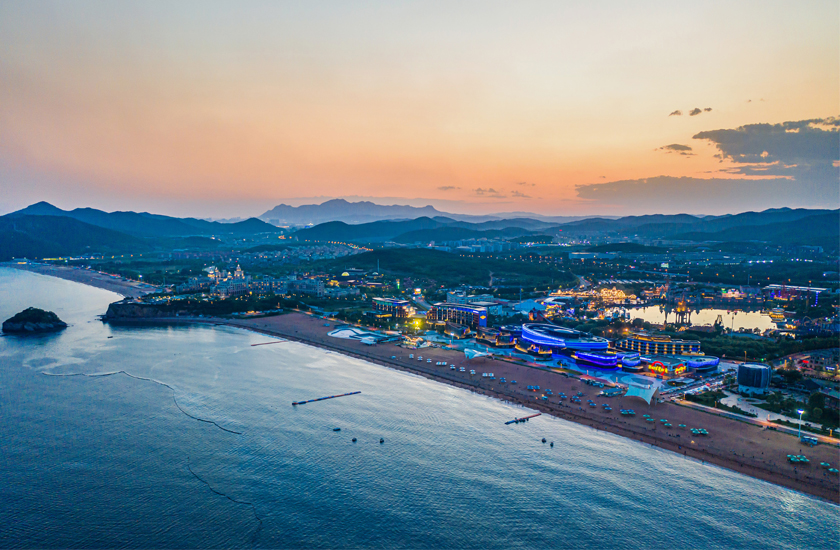
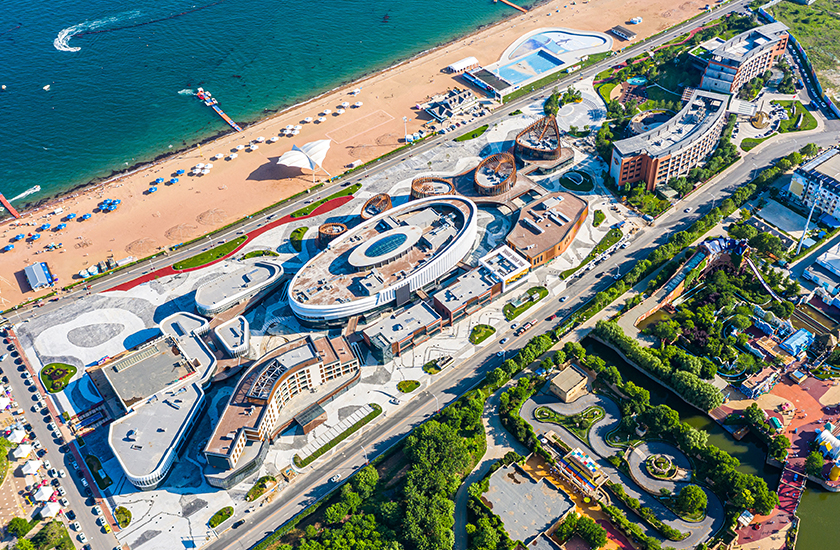
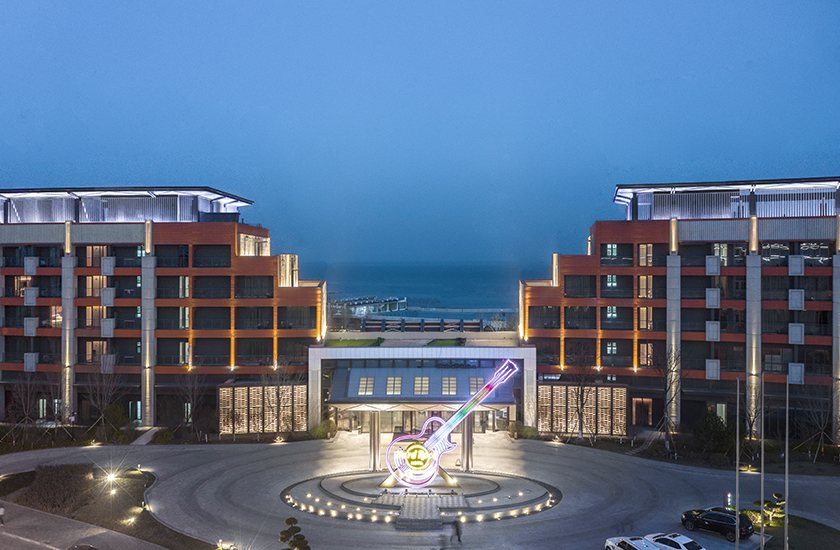
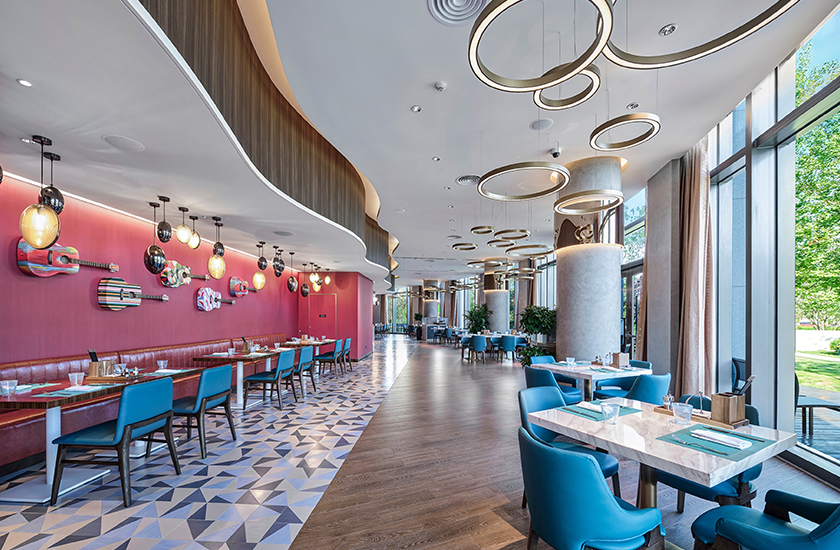
Another Gold winner in the Mixed-Use Architecture (Built) category, Luneng Dalian Jinshitan Meilihui leverages its expansive coastal geography to create an interconnected tourism destination integrating hospitality, retail and recreation functions. The architectural design is anchored in four core strategies – Embracing the Sea, Integrating with the City, Linking Landscapes and Coexisting Harmoniously – with soft curves employed in building clusters, emulating the natural growth of coastal ecosystems while dissolving the boundaries between the built and natural environment. The development adopts a seascape penetration approach in its spatial planning, featuring buildings in scattered layouts and elongated curvilinear forms to extend ocean-view corridors and create transparent visual pathways through architectural gaps. Programmatically, diverse commercial and retail functions create a dynamic field to promote urban vitality, prioritising spatial permeability through multi-level entries and experiential pathways. Utilising a contextually sensitive interplay of solid and void, the architectural design generates layered, vibrant spaces to form an open and rhythmically diverse coastal development.
India
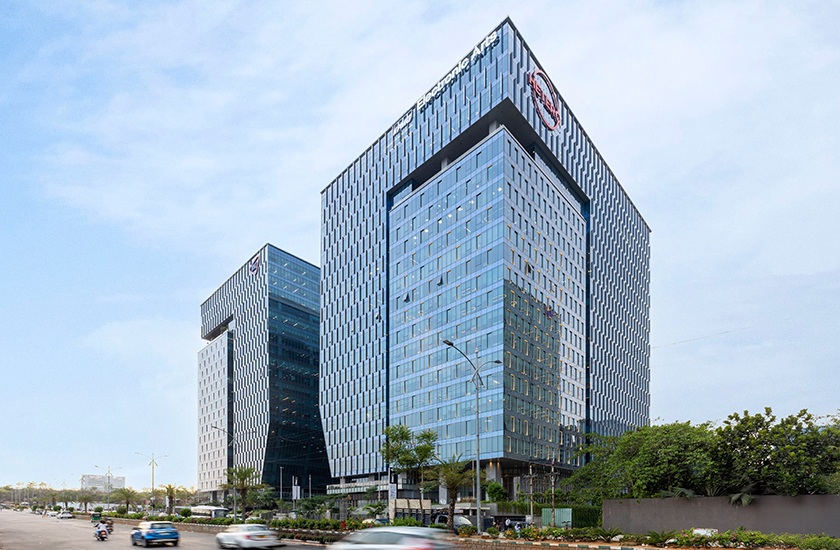
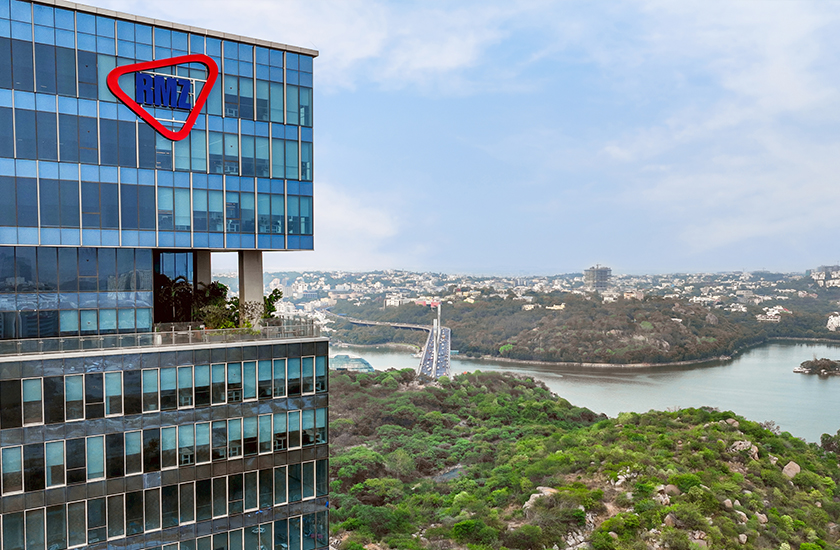
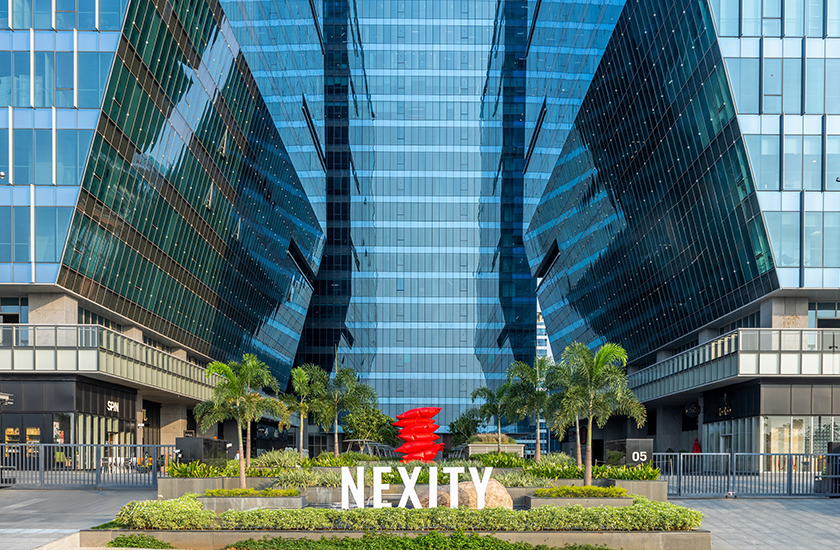
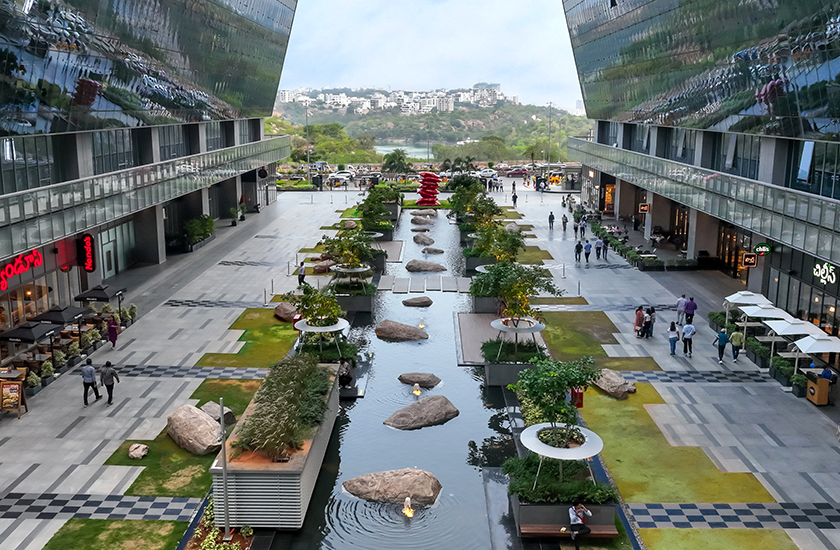
Awarded Gold in the Office Building (Built) category for its environmentally conscious and wellbeing-centric design, RMZ Nexity seamlessly integrates biophilic principles with advanced technology to create a dynamic workplace setting. Conceptualised in response to its site and emerging business trends, the design features a three-sided frontage offering mixed-use functions for work and leisure. Presenting a southeast-facing lakeview, this deliberate spatial planning maximises visual sightlines while facilitating connectivity with its surroundings. Green, pedestrian-friendly public spaces such as courtyards and boulevards are curated with occupant wellbeing in mind, introducing social vibrancy through the provision of an al-fresco dining area and open-air theatre to foster a holistic workplace culture. A versatile space for learning, collaboration and community engagement, the Knowledge Plaza sits at the heart of the development, and is complemented by public areas that connect occupants with landscaped parks, sculptured gardens, bio ponds and green lobbies for a biophilic experience. Placing a strong emphasis on occupant comfort and sustainability, the design leverages prevailing winds for natural ventilation with water features aiding in evaporative cooling, and is grounded in energy-efficient strategies complemented by vertical sun-shading elements. A LEED Gold and Well-certified development, RMZ Nexity blends sustainability and community to create an integrated campus that addresses contemporary workplace needs.
Singapore
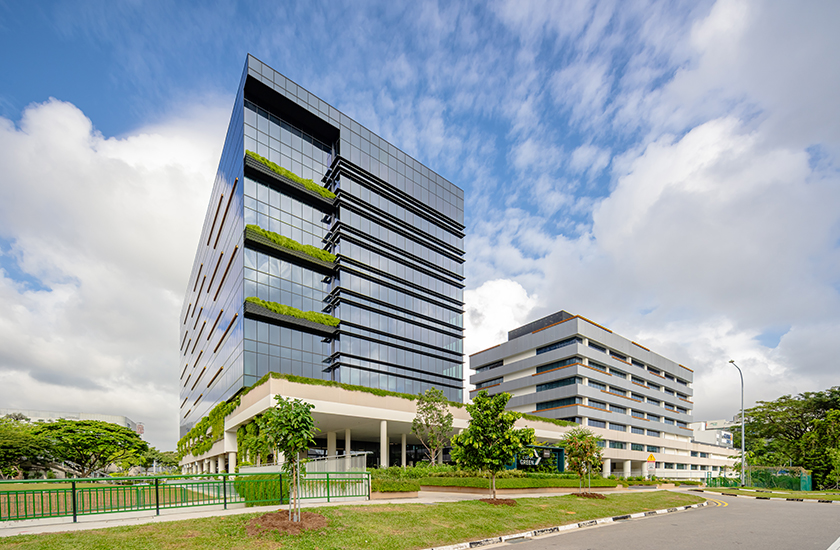
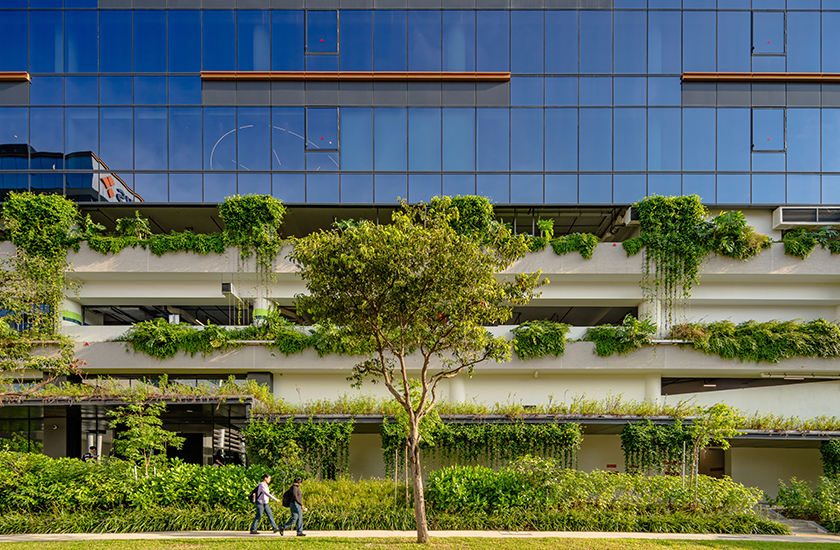
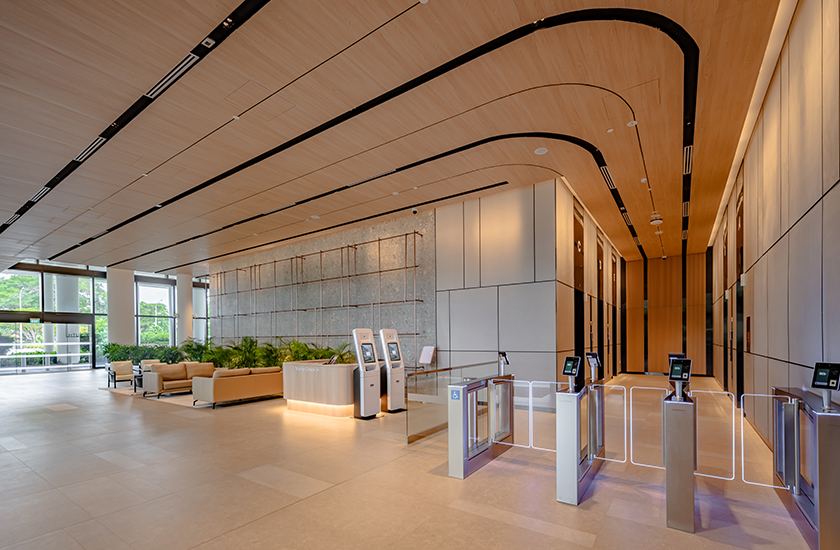
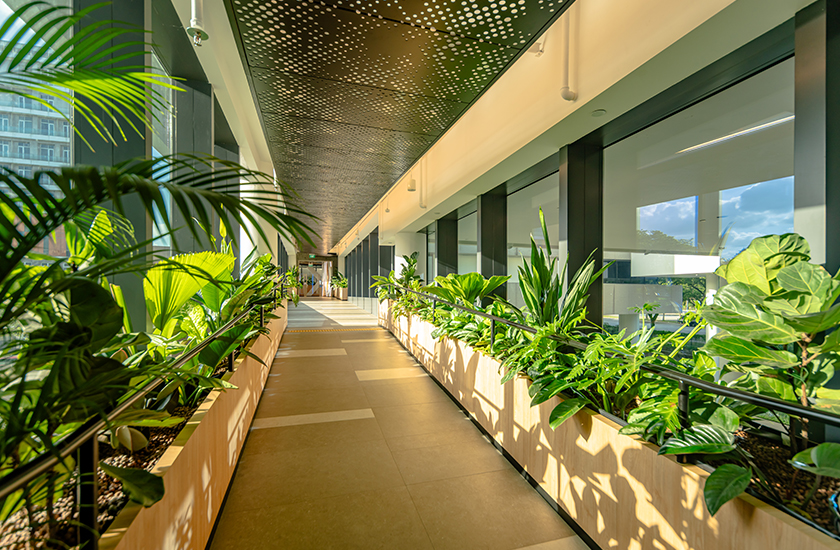
Recognised with a Gold Award in the Office Building (Built) category for its forward-looking approach to commercial adaptive reuse and sustainable urban regeneration, Paya Lebar Green is a joint development by Certis and Lendlease to transform the former Certis Centre into a green and healthy workplace. Comprising the retrofit of an existing block and a new Grade-A office building, the design of Paya Lebar Green activates the ground plane and enhances pedestrian connectivity to establish a dynamic urban node that contributes to the vibrancy of the district. Articulated around five core themes of Circuit, Carbon, Capacity, Climate and Community, the design integrates sustainable strategies with a focus on wellbeing. This is complemented by the provision of biophilic spaces as social settings to foster a sense of place and shared identity. The development’s suite of energy-efficient programmes, including the use of chilled beams, passive cooling techniques, onsite renewable energy and intelligent M&E systems, comes together to reduce operational energy consumption while ensuring a comfortable internal environment. Thoughtful integration of shading fins and extensive greenery further reduces solar heat gain, contributing to natural cooling and biodiversity. The first office development in both new and existing categories to earn all five sustainability badges – Health & Wellbeing, Whole Life Carbon, Resilience, Intelligence and Maintainability – under the BCA Green Mark 2021 scheme, Paya Lebar Green has achieved Green Mark Platinum – Super Low Energy and is positioned as a resilient, people-centric workplace.
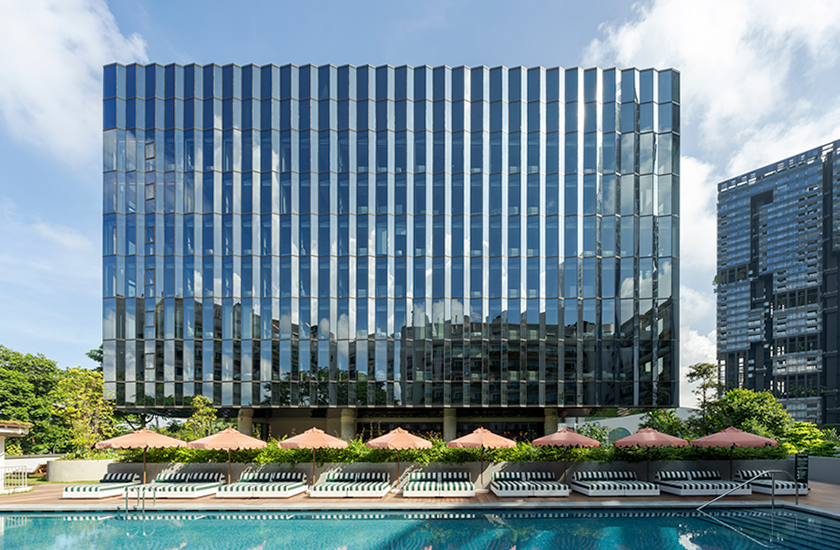
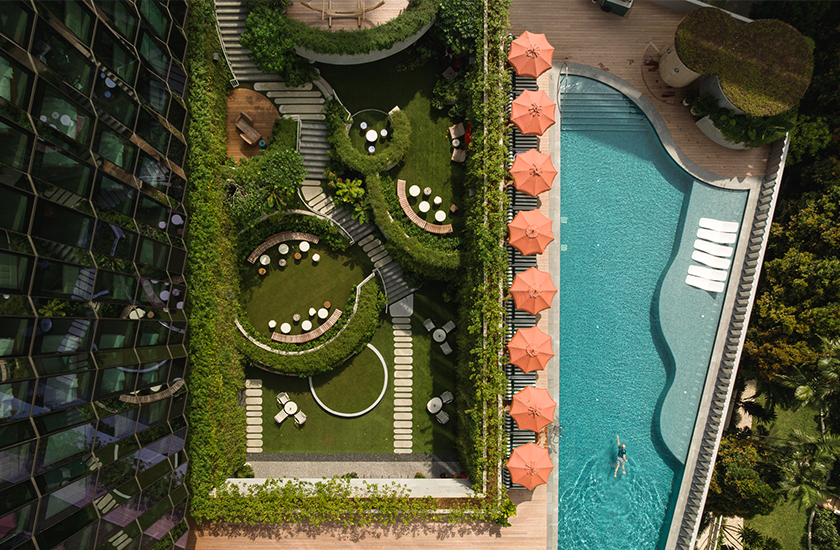
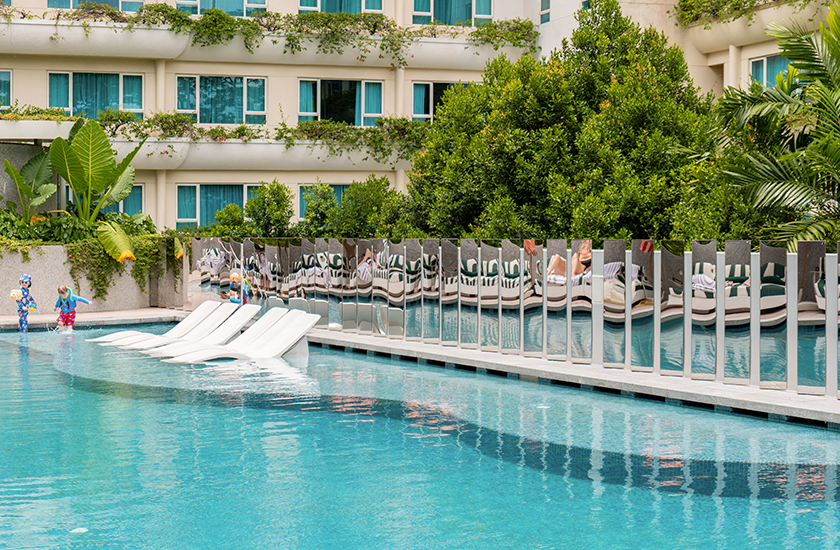
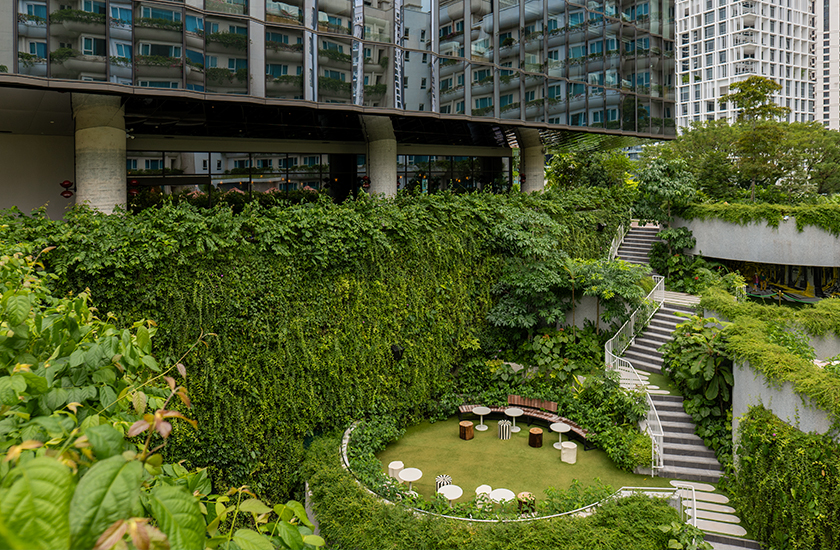
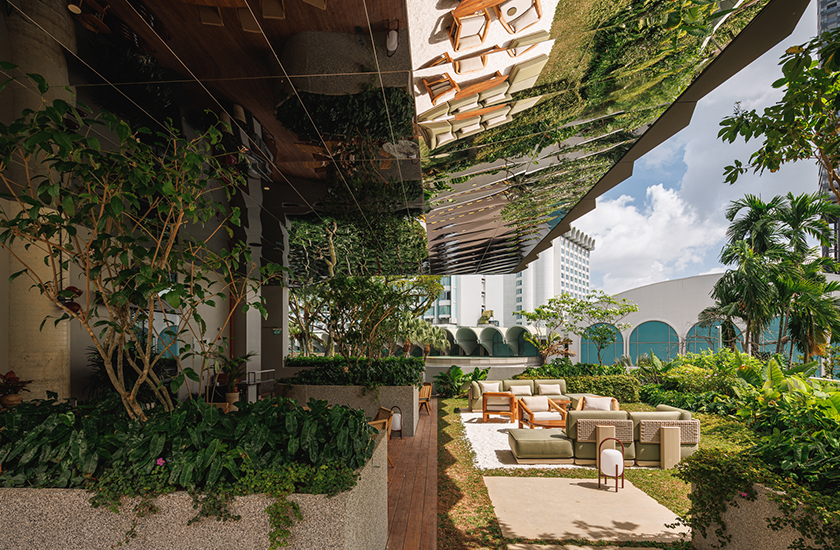
Winning Gold in the Hospitality Architecture (Built) category, The Standard, Singapore is a distinct celebration of The Standard brand’s origin. With the American billboard as a key inspiration, the lenticular façade is articulated as a visually static yet expressive surface. Architecturally, its massive cantilevers and structural transfers are central to the design scheme, enabling the establishment to achieve an optimal massing and orientation for ventilation and reduced solar heat gain within an irregular site. At the same time, the design encapsulates the site’s duality – given its position between the Orchard retail belt and the Botanic Gardens – to fuse urban vibrancy with natural serenity. Applying the façade’s lenticular treatment at the podium, the design guides guests through amenities and invites them into verdant, landscaped areas with stepped terraces. Foregrounding an alternative interpretation of pop-biophilia, these carved-out spaces serve as vibrant social settings that imbue a sense of play and exploration aligned with the brand’s identity. Balancing design intent with commercial viability, The Standard, Singapore blends culture and leisure to create a layered, multisensorial experience.
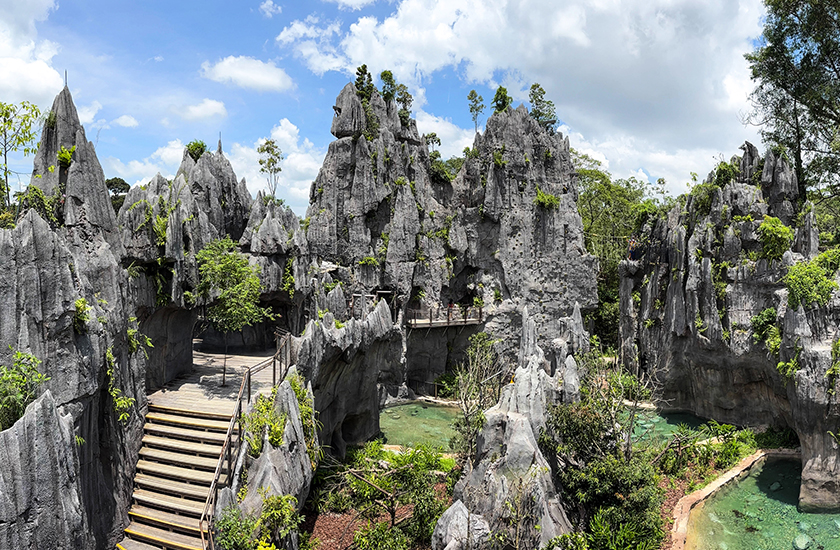
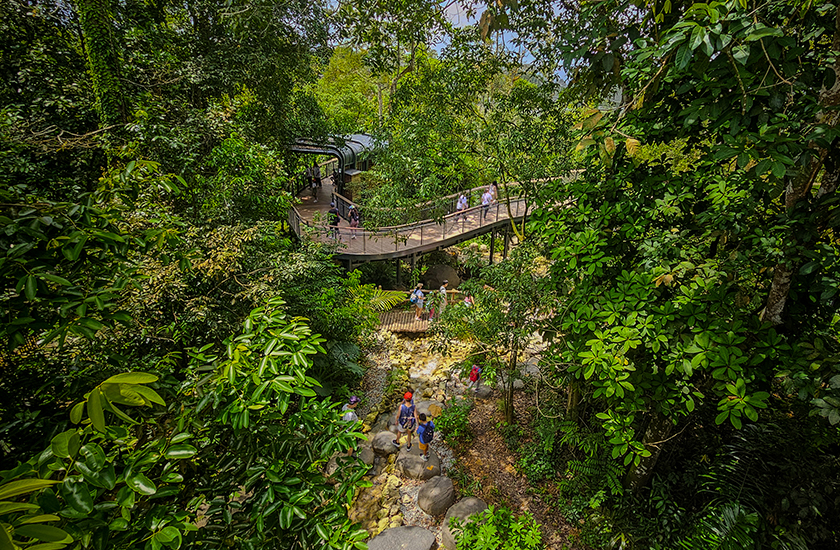
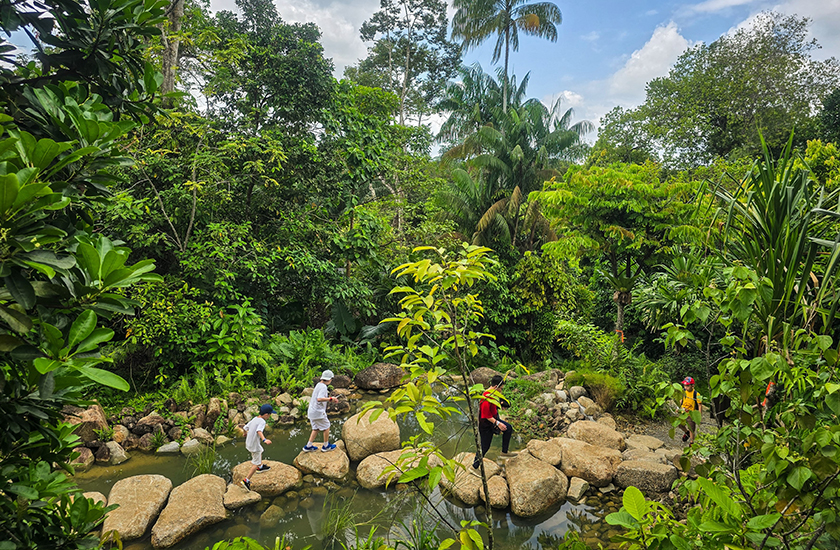
A Gold winner in the Public Landscape (Built) category, Rainforest Wild Adventure WEST (formerly Rainforest Wild ASIA) by DP Green – the practice’s landscape architecture arm – works with the site’s natural landforms and processes to create a multilayered, experiential park that poses as an integrated destination for exploration and education. Adjacent to the Central Catchment Nature Reserve, the park strengthens ecological linkages through wildlife corridors that aid in habitat movement, boosting species resiliency and genetic diversity. Emphasising environmental preservation, over 40% of the existing forest has been preserved and more than 45% of the site has undergone ecological rehabilitation through forest restoration and selective forest repair. Through close collaboration with authorities, nature groups and researchers, Rainforest Wild Adventure WEST adopts a participatory planning approach to facilitate long-term conservation and sustainable management, ensuring effective environmental stewardship.